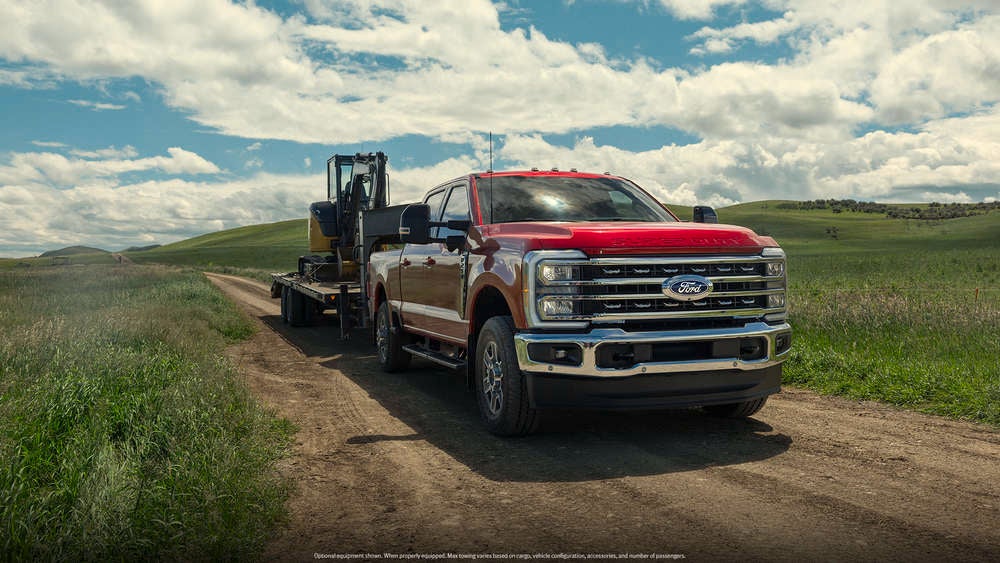
Ford F-250 Super Duty Towing Powertrain Overview
If towing is one of your main reasons for shopping a heavy-duty truck in Sealy, the right 2026 Ford F-250 Super Duty powertrain depends on more than horsepower or torque alone. Your loaded trailer weight, hitch type, cargo, passengers, axle ratio, cab style, bed length, drivetrain, and factory towing equipment all affect the rating of a specific truck.
For a current-model overview, Ford lists four 2026 Super Duty engine choices. The 6.8L gas V8 is rated at 405 horsepower and 445 lb.-ft. of torque. The available 7.3L gas V8 is rated at 430 horsepower and 485 lb.-ft. of torque. The available 6.7L Power Stroke® V8 Turbo Diesel is rated at 475 horsepower and 1,050 lb.-ft. of torque. The available High-Output 6.7L Power Stroke® V8 Turbo Diesel is rated at 500 horsepower and 1,200 lb.-ft. of torque. Those figures give you a useful starting point, but the correct towing answer always comes from the exact truck and the exact trailer you plan to use.
If you want to compare available trucks locally, start with Ryan Ford’s new Ford inventory, then review the used truck inventory and Ford Blue Advantage vehicles. Specifications, pricing, availability, and equipment can vary by model year, trim, package, drivetrain, cab, bed, axle ratio, and configuration, so confirm the details for the specific truck with Ryan Ford and Ford before making a final decision.
What Powertrains Are Available in the 2026 F-250 Super Duty?
Ford’s current Super Duty information gives F-250 shoppers a clear engine lineup to compare.
Ford’s 2026 Super Duty model overview, the F-250 XL model details, and the 2026 Super Duty technical specifications are useful places to review those current engine figures.
Why Does the Whole Truck Matter More Than the Engine Alone?
A higher torque figure does not mean every diesel F-250 tows the same amount. Ford towing ratings are configuration-specific. That means the final number depends on the truck’s engine, axle ratio, drivetrain, cab, bed, hitch setup, payload, and other factory equipment.
For example, one F-250 Crew Cab 4x4 with diesel power may be configured very differently from another F-250 Regular Cab 4x2 with a gas engine. Even though both wear the same nameplate, their towing ratings, payload ratings, and trailer suitability can be very different.
That is why the most useful towing comparison includes:
Your trailer’s fully loaded weight, not just its empty weight
Conventional tongue weight or fifth-wheel pin weight
Passenger and cargo weight in the truck
Hitch type and trailer brake setup
Typical route, grades, and towing frequency
Ford’s 2026 Super Duty towing guide makes the same point. Maximum towing figures apply only to properly equipped vehicles and vary based on configuration, cargo, accessories, and the number of passengers.
Should You Choose a Gas or Diesel F-250?
That depends on how often you tow, how heavy the trailer is, and how you use the truck the rest of the week.
A gas F-250 can make sense if your work or recreation involves lighter trailers, occasional towing, or a preference for a gas-engine setup. The 6.8L gas V8 gives you the standard starting point, while the available 7.3L gas V8 is worth comparing if you want added gas-engine output.
A diesel F-250 may deserve a closer look if your routine includes frequent towing, heavier equipment trailers, or longer hauling distances. The available 6.7L Power Stroke® diesel and the High-Output version bring much higher torque figures, but the truck still has to be matched to the trailer correctly.
For many Sealy-area towing decisions, the better question is not simply gas or diesel. It is which exact truck fits the trailer, the cargo, the route, and the frequency of use.
What Towing Equipment Should You Compare With the Powertrain?
A capable engine is only part of a safe towing setup. The rest of the truck matters just as much. Trailer brakes, hitch equipment, mirrors, tire choice, cargo placement, and payload all affect the real towing experience.
Ford also offers available towing-focused technology on current Super Duty trucks, including features such as Pro Trailer Backup Assist™, Pro Trailer Hitch Assist™, and Onboard Scales with Smart Hitch on certain configurations. These systems are designed to assist the driver, not replace attentive driving, proper loading, or correct trailer setup.
If you expect to tow often, it helps to review:
Hitch type and trailer connection requirements
Trailer brake controller availability
Mirrors and visibility needs
Payload label information
Tire and wheel setup
Bed length if fifth-wheel or gooseneck towing is part of the plan
If you are trading out of your current truck before moving into a different towing setup, Ryan Ford’s trade appraisal tool can help you prepare for the next step.
How Should You Confirm the Right F-250 Setup?
The best way to confirm a towing setup is to compare the exact truck, the exact trailer, and the exact equipment together. Door-jamb labels, the towing guide, the owner’s manual, and the truck’s installed equipment matter more than a broad lineup maximum.
This is especially important for shoppers comparing:
Regular Cab, SuperCab™, and Crew Cab layouts
4x2 and 4x4 drivetrains
Different bed lengths
Gas and diesel powertrains
Conventional towing versus fifth-wheel or gooseneck towing
If ownership support matters after the purchase, Ryan Ford also offers online service scheduling, Ford Mobile Service, and Ford Pickup & Delivery for participating service visits.
Compare Powertrain Options With Confidence
Review the Ford F-250 Super Duty in Katy to compare available configurations and focus on the equipment that fits your towing needs. Our team at Ryan Ford can help you narrow down the powertrain, cab, bed, and available towing equipment to consider. When you are ready to discuss your truck needs, contact us for personalized assistance.
Frequently Asked Questions
Which 2026 F-250 Engine Has the Most Torque?
The available High-Output 6.7L Power Stroke® V8 Turbo Diesel has the highest published torque figure in the 2026 F-250 lineup at 1,200 lb.-ft. Torque alone does not determine the truck’s final towing rating.
Is the 7.3L Gas V8 Better Than the 6.8L Gas V8 for Towing?
Not automatically. The 7.3L gas V8 has higher published output, but the better choice depends on the exact truck configuration, trailer weight, payload needs, and how often you tow.
Do I Need Diesel for Every Heavy Trailer?
Not always. Some gas-engine F-250 configurations may fit certain towing needs well. The correct answer depends on the exact trailer, loading, route, and the truck’s published rating.
Why Should I Bring My Trailer Details Before Comparing Trucks?
Because loaded trailer weight, tongue or pin weight, passengers, cargo, hitch equipment, and route conditions all affect whether a specific F-250 configuration fits your towing needs.