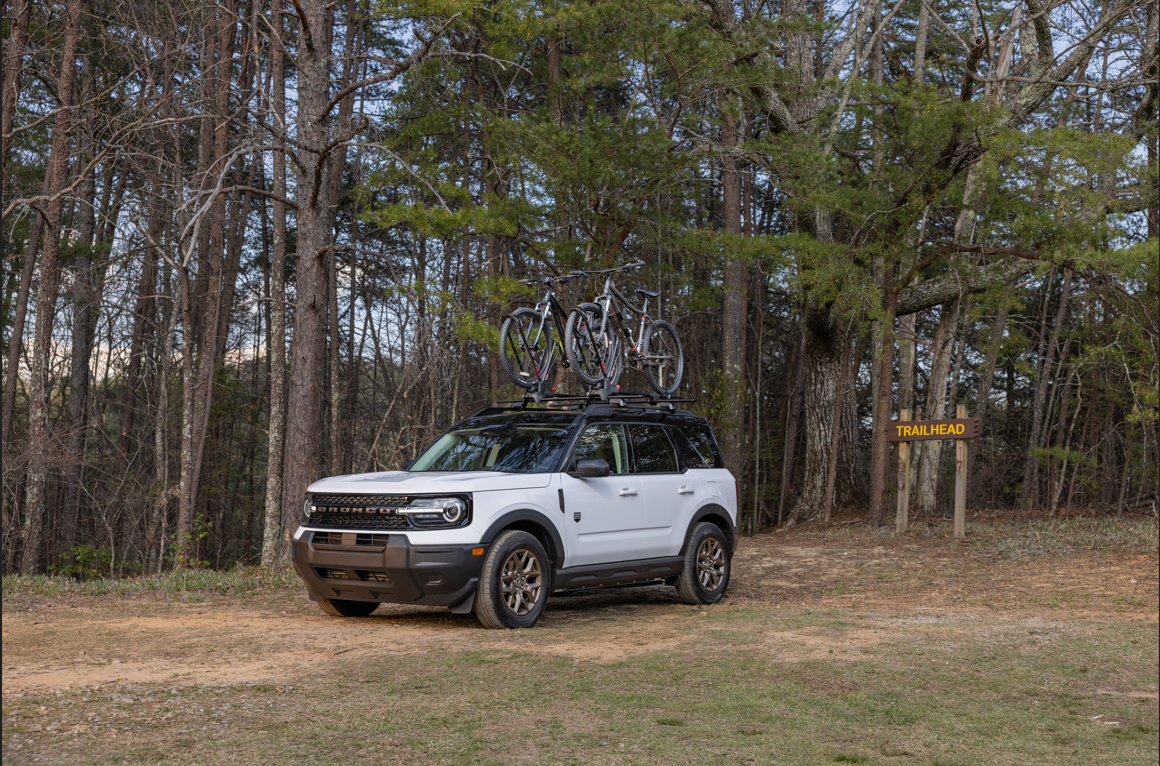
Ford Bronco Vs. Jeep Wrangler for Texas Off-Roading
For drivers in Sealy and along the I-10 corridor west of Houston, the better off-road SUV depends on where you actually plan to drive and how often the vehicle will also be used on pavement. In a current-model comparison, the 2026 four-door Ford Bronco Big Bend® with the 2.3L EcoBoost® engine is rated at 300 horsepower and 325 lb.-ft. of torque. Ford also lists the available 2.7L EcoBoost® V6 at 315 horsepower and 410 lb.-ft. of torque on regular fuel, or 330 horsepower and 415 lb.-ft. of torque on premium fuel. Jeep lists the 2026 Wrangler 3.6L V6 at 285 horsepower and 260 lb.-ft. of torque, and the available 2.0L turbo I4 at 270 horsepower and 295 lb.-ft. of torque. The Wrangler Moab 392 offers a 6.4L V8 rated at 470 horsepower and 470 lb.-ft. of torque.
That does not make one SUV automatically better for every driver. It does show why engine choice, body style, roof style, tires, and trail equipment all need to be compared before you decide between the Bronco and Wrangler. If you want to start with local options, Ryan Ford’s new Ford inventory, used inventory, and Ford Blue Advantage vehicles can help you compare different ownership paths. Specifications, pricing, availability, and equipment can vary by model year, trim, package, and configuration, so confirm the exact details for the specific vehicle with Ryan Ford and Ford before making a final decision.
What Makes the Bronco and Wrangler Different?
The biggest difference is not just the badge. It is how each SUV is configured for your real use.
The Bronco lineup gives Sealy shoppers several distinct trims to compare, including Base, Big Bend®, Outer Banks®, and Badlands®. Jeep’s Wrangler lineup also changes substantially by trim, engine, body style, and equipment. That matters because a daily-driven four-door SUV with cargo and passenger needs may point you in a different direction than a more specialized off-road build.
A quick current snapshot:
If cargo flexibility matters for camping gear, coolers, recovery equipment, or family travel, the Bronco has an advantage in published cargo volume in comparable four-door configurations.
How Should You Compare Trail Equipment?
Trail capability needs to be judged by the exact SUV, not by broad model reputation. Ground clearance, tire size, wheelbase, breakover angle, roof style, and underbody protection can all change by trim and body style.
That is why it helps to review the exact Bronco configuration you want before focusing on one headline claim. A Bronco Big Bend® and a Bronco Badlands® are not the same vehicle in practice, just as one Wrangler configuration can be very different from another.
When narrowing the comparison, focus on:
Tire type and tire size
Four-wheel-drive hardware for the specific trim
Ground clearance and off-road angles where published
Roof and door configuration
Cargo space for the gear you actually carry
Passenger room if the SUV will be used beyond weekend trail trips
If you want to review official model details before test-driving, it helps to compare the 2026 Bronco Big Bend® model details, the 2026 Bronco technical specifications, and the 2026 Jeep Wrangler specifications.
What Matters Most for Daily Driving in Sealy?
Even an off-road SUV spends most of its life on regular roads. That means daily comfort, visibility, rear-seat access, cargo organization, and ease of parking deserve just as much attention as trail hardware.
For many Sealy drivers, the right SUV is the one that feels manageable on local roads during the week and still fits weekend recreation plans. If most of your miles will happen on pavement, pay close attention to:
Rear-seat access
Cargo loading height
Roof and door storage needs
Wind and road noise
How easy the vehicle is to park and load
Open-air driving can be part of the appeal for both lineups, but removable roof panels and doors also bring practical questions. You may need storage space at home, time to remove or reinstall components, and a realistic plan for how often you will actually use those features.
How Should You Think About Ownership After the Trail?
Trail use can change what you inspect and maintain. After off-road driving, it is smart to check tires, wheels, underbody areas, lights, cameras, and any parts exposed to mud, rocks, or debris. The owner’s manual remains the best guide for model-specific operating and maintenance information.
Accessories deserve the same level of planning. Tires, roof gear, towing equipment, and added weight can affect handling, visibility, payload, and other limits. The exact impact depends on the vehicle and equipment.
If service support is part of your ownership plan, Ryan Ford also offers ways to help maintain your vehicle over time, including online service scheduling, Ford Mobile Service, and Ford Pickup & Delivery for participating service visits.
Compare Your Trail-Ready Options
Use our Ford Bronco vs. Jeep Wrangler research to revisit the features and ownership considerations that matter most to your plans. At Ryan Ford, we can help you narrow your choices around the equipment and configuration you prefer. When you are ready for more vehicle-specific guidance, contact us to discuss your next steps.
Frequently Asked Questions
Is the Bronco More Powerful Than the Wrangler?
It depends on the engines being compared. Ford lists the 2026 Bronco Big Bend® 2.3L EcoBoost® at 300 horsepower and 325 lb.-ft. of torque, compared with 285 horsepower and 260 lb.-ft. for the Wrangler 3.6L V6. The Wrangler Moab 392's 6.4L V8 is rated higher, at 470 horsepower and 470 lb.-ft. Compare the exact versions you are considering.
Does the Bronco Offer More Cargo Space Than the Wrangler?
In the published four-door figures referenced here, yes. Ford lists up to 38.3 cubic feet behind the rear seats and up to 83.0 cubic feet maximum in a four-door soft-top Bronco, while Jeep lists 31.7 cubic feet behind the rear seats and 72.4 cubic feet with the rear seats folded in the four-door Wrangler.
Should I Compare a Bronco Big Bend® or a Bronco Badlands® to a Wrangler?
That depends on how serious your off-road plans are and how often the SUV will also be used for commuting, travel, or cargo. Big Bend® and Badlands® serve different priorities, so it helps to compare the specific trim that matches your routine.
Can Accessories Change Capability?
Yes. Tires, roof equipment, towing gear, and other accessories can affect handling, weight, visibility, and vehicle-specific limits. Confirm specifications, pricing, availability, and equipment for the exact Bronco or Wrangler you are considering, because details can vary by model year, trim, package, and configuration.