Blog / Ford Dealership

Maverick Vs. Santa Cruz: Which Compact Truck Fits You?

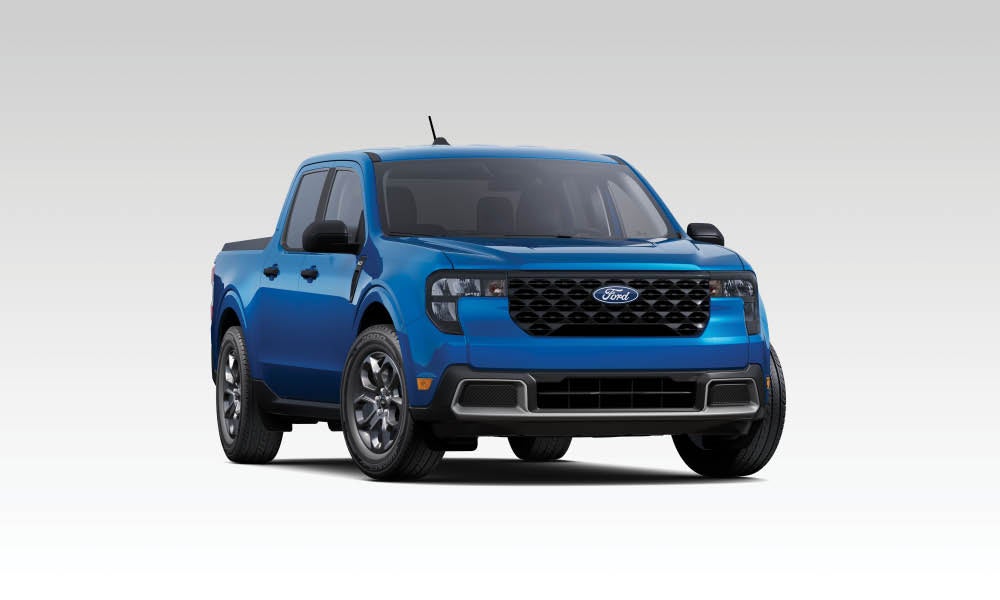
Ford Maverick

Ford Maverick Vs. Hyundai Santa Cruz in Sealy


For drivers in Sealy and along the I-10 corridor west of Houston, the better compact truck depends on what you need it to do most often. The 2026 Ford Maverick stands out if you want a standard hybrid powertrain on XL, XLT, and Lariat, a 54.4-inch bed length, and up to 4,000 pounds of towing when properly equipped with the available 4K Tow Package. The 2026 Hyundai Santa Cruz may appeal more if you want a higher published maximum towing figure, because Hyundai lists up to 5,000 pounds for properly equipped turbocharged trims, along with a 52.1-inch bed length and a 281-horsepower available turbocharged engine.


A useful starting point is to compare the exact vehicles you are considering, not just the model names. You can begin with Ryan Ford’s new Ford Maverick inventory, then review the broader market through the used vehicle inventory. If you are replacing a current vehicle, Ryan Ford also offers a trade appraisal tool, and shoppers who want to plan the next step early can start with the online credit application. Specifications, pricing, availability, and equipment can vary by model year, trim, powertrain, drivetrain, package, and configuration, so confirm the exact details for the specific vehicle with Ryan Ford and the manufacturer before making a decision.


What Are the Biggest Differences Between These Two Compact Trucks?


The Maverick and Santa Cruz both mix pickup utility with everyday drivability, but they get there in different ways.


Feature / Specification

2026 Ford Maverick

2026 Hyundai Santa Cruz

Standard Engine

2.5L Hybrid (XL, XLT, Lariat)

2.5L 4-Cylinder (191 hp)

Available Engine

2.0L EcoBoost® (250 hp, 280 lb.-ft.)

2.5L Turbo (281 hp, 311 lb.-ft.)

Bed Length

54.4 in.

52.1 in.

Bed Width

53.3 in. (42.6 in. between wheelhouses)

53.9 in. (42.7 in. between wheelwells)

Standard Towing

2,000 lbs.

Up to 3,500 lbs. (non-turbo)

Max Towing

4,000 lbs. (with 4K Tow Package)

Up to 5,000 lbs. (turbo trims)

Max Payload / Load Limit

1,500 lbs.

1,411 lbs.

Center Display

Standard 13.2-inch display

Standard 12.3-inch touchscreen


If you want a hybrid compact truck, the Maverick is the one to study first. If your comparison starts with maximum turbo towing on paper, the Santa Cruz deserves a closer look.


Which Maverick Powertrains Matter Most for Daily Use?


One of the clearest differences is the Maverick’s powertrain range. Ford’s current Maverick pages show that XL, XLT, and Lariat come standard with a 2.5L hybrid powertrain, and the XLT and XL model pages also confirm an available 2.0L EcoBoost® engine. Ford lists that available 2.0L EcoBoost® at 250 horsepower and 280 lb.-ft. of torque.


That gives Maverick shoppers a real choice between a hybrid-focused setup and a gas engine that may make more sense for certain towing or performance priorities. Ford also notes that the standard FWD hybrid setup is rated at 42 city/35 highway/38 combined mpg. Hyundai’s 2026 Santa Cruz uses gas engines only, with a 191-horsepower 2.5L engine or a 281-horsepower 2.5L turbocharged engine depending on trim.


For a daily Sealy commute, that difference can matter as much as any headline towing number. If fuel use is one of your top concerns, the Maverick hybrid brings something Santa Cruz does not currently offer.


How Do Bed Size and Cargo Utility Compare?


The Maverick gives you a slightly longer bed. Ford lists the 2026 Maverick bed at 54.4 inches long, 53.3 inches wide, and 42.6 inches between the wheelhouses. Hyundai lists the 2026 Santa Cruz bed at 52.1 inches long, 53.9 inches wide, and 42.7 inches between the wheelwells.


That means the Maverick offers more bed length, while the Santa Cruz is slightly wider on paper. Neither figure alone tells you which one is more useful. A longer bed can matter for lumber, longer boxes, or home-improvement supplies. A bit more width can matter for bins, coolers, or the way you stack gear.


Think about what you carry most often:


  • Home project supplies

  • Yard or ranch gear

  • Coolers and weekend equipment

  • Work bags and small tools

  • Bikes or sports equipment


The better layout is the one that fits your routine most often, not only the largest thing you may haul once or twice a year.


How Should You Compare Towing and Payload?


This is where configuration matters most. Ford’s current 2026 Maverick pages state that the truck has a standard towing capacity of 2,000 pounds and a maximum towing capacity of 4,000 pounds when equipped with the available 4K Tow Package. On the Maverick XLT, Ford specifically says the 4,000-pound maximum requires the available 2.5L hybrid or 2.0L EcoBoost®, AWD, and the 4K Tow Package.


Hyundai lists up to 3,500 pounds of towing for 2026 Santa Cruz non-turbo trims and up to 5,000 pounds for properly equipped turbocharged trims. Hyundai also states that towing capacity varies by configuration, so the exact trim still matters.


Payload needs the same level of care. Ford lists a maximum payload of 1,500 pounds on certain 2026 Maverick configurations. Hyundai’s 2026 Santa Cruz specs list a maximum load limit or vehicle capacity weight of 1,411 pounds. These are not blanket ratings for every version, and they should not be treated as if they apply to every truck on the lot.


Use this checklist before comparing two specific vehicles:


  • What is the trailer’s fully loaded weight, not just its empty weight?

  • How much weight will be in the bed on a normal week?

  • Will passengers, tools, or accessories stay in the truck full time?

  • Does the exact truck include the required towing equipment?

  • Will tongue weight reduce your available payload more than expected?


If towing is part of your plan, it helps to review the current Maverick specifications, the 2026 Maverick towing guide, and the 2026 Santa Cruz specifications before comparing two exact configurations.


What About Everyday Comfort and Technology?


Compact trucks are often daily drivers first and utility vehicles second, so cabin details matter. Ford’s Maverick pages highlight a standard 13.2-inch center display with SYNC® 4. Ford also offers several distinct trims that can change the truck’s personality, including XL, XLT, Lariat, Tremor®, and Lobo™.


Santa Cruz takes a different approach, blending pickup-bed utility with a more crossover-like shape and available features such as an integrated tonneau cover on certain trims. Hyundai also builds towing differences directly into the engine and trim walk.

For daily use, the right questions are practical:


  • Is the hybrid option important to you?

  • Will the rear seat be used for passengers often?

  • Do you need the longest bed possible in this size class?

  • Are you focused on occasional towing or regular towing?

  • Do you want a compact truck that leans more toward truck utility or crossover comfort?


Ford driver-assist features are designed to assist the driver. They do not replace attentive driving, safe following distance, or responsibility behind the wheel.


Which One Makes More Sense for a Sealy Driver?


If your routine leans toward commuting, efficiency, flexible compact-truck utility, and the availability of a hybrid powertrain, the Maverick is the more distinctive option. If your priority is the highest published towing figure in this comparison and you are comfortable shopping around the turbocharged Santa Cruz trims that support it, Hyundai offers a different path.


The most useful comparison is always the specific truck in front of you. Confirm specifications, pricing, availability, equipment, towing ratings, and payload details for the exact vehicle with Ryan Ford and the manufacturer, because these details can change by model year, trim, powertrain, drivetrain, package, and configuration.


Compare Your Compact Truck Options With Confidence


Review our Maverick vs. Santa Cruz research to revisit the features and considerations that matter most for your daily driving, hauling, and weekend plans. At Ryan Ford, we can help you sort through Ford Maverick configurations and available equipment for the truck that fits your needs. Please contact us to confirm specifications, pricing, availability, and equipment for any specific vehicle before making your decision.


Frequently Asked Questions


Does Every 2026 Maverick Have the Same Towing Capacity?


No. Ford lists a standard towing capacity of 2,000 pounds, but the maximum 4,000-pound figure requires the proper configuration and the available 4K Tow Package. Review the exact truck before assuming it matches the lineup maximum.


Is the Maverick Hybrid Better for Every Driver?


Not necessarily. The hybrid setup can be attractive for daily driving and fuel-conscious ownership, but some shoppers may prefer the available 2.0L EcoBoost® engine based on towing needs, drivetrain preference, or how they plan to use the truck.


Does the Santa Cruz Offer More Towing Than the Maverick?


It can, depending on trim. Hyundai lists up to 5,000 pounds for properly equipped 2026 Santa Cruz turbocharged trims, while Ford lists up to 4,000 pounds for properly equipped 2026 Maverick models with the available 4K Tow Package.


Should I Compare a New Maverick With a Used One?


Yes. Model-year changes can affect powertrain choices, technology, towing equipment, and available features. A used Maverick may still fit your needs well, but the details should be reviewed for that specific truck.
Posted in:

Related Posts

Ford Explorer

Inside Ford Explorer Vs. Honda Pilot Family Travel Differences

For many Sealy families, the better fit comes down to how the SUV will be used most often. The 2026 Ford Explorer stands out if you want standard 5,000-pound maximum towing across the lineup, a choice of six- or seven-passenger seating depending on trim and options, and current Ford technology like a 13.2-inch center display. The 2026 Honda Pilot may appeal more if you want more published passenger and cargo room, including up to eight-passenger seating depending on trim, 40.8 inches of second-row legroom, and 18.6 cubic feet of cargo space behind the third row. For a practical comparison in Sealy and along the I-10 corridor west of Houston, start with the exact vehicles you are considering. A current new Ford Explorer selection, the available used SUV inventory, and the Ford Blue Advantage lineup can help you compare model years, trims, and equipment side by side. Specifications, pricing, availability, and features can vary by model year, trim, package, drivetrain, and configuration, so confirm the details for the specific vehicle with Ryan Ford and Ford before making a final decision. Which Seating Setup Works Better for Your Family? If your third row is used often, seating layout matters as much as passenger count. On the 2026 Explorer, Ford says seating varies from six to seven passengers depending on model and options. Second-row captain’s chairs are standard on all Explorer models except ST-Line, while ST-Line uses a standard second-row bench and some other Explorer trims can be configured with a bench seat. Honda takes a different approach. The 2026 Pilot seats seven or eight depending on trim. Honda also publishes 40.8 inches of second-row legroom and 32.5 inches of third-row legroom. Ford publishes 37.5 inches of second-row legroom on Explorer Active 100A and Active models, 37.0 inches on ST-Line, ST, Tremor, and Platinum, plus 31.8 inches of third-row legroom across the current Explorer line. Published Family-Space Snapshot Numbers are helpful, but family fit is more than measurements. If you use child seats, boosters, or a stroller every day, bring that gear into the decision. A second-row bench can help if you regularly carry more people. Captain’s chairs can help if you want easier third-row access. What Cargo Space Matters Most on Real Trips? For family travel, the most useful cargo number is usually the one that matches your normal seating setup. If every row is filled on a road trip, the space behind the third row matters much more than the biggest cargo figure with rear seats folded. Ford lists 16.3 cubic feet of cargo room behind the third row on the 2026 Explorer. Maximum cargo capacity is 85.8 cubic feet on Explorer Active 100A, Active, and ST-Line, and 85.3 cubic feet on ST, Tremor, and Platinum. Honda lists 18.6 cubic feet behind the third row on the 2026 Pilot, 48.5 cubic feet behind the second row, and maximum cargo volume that varies by trim, reaching as much as 113.7 cubic feet. That gives the Pilot an advantage on published cargo volume, but layout still matters. The shape of the load floor, the size of the cargo opening, and how easily the seats fold can affect daily use just as much as the official numbers. Before your drive, think about the gear that usually travels with your family: Child seats or boosters A stroller or folding wagon Sports bags or school backpacks Coolers, groceries, or weekend luggage A pet crate or travel kennel If you want to test cargo fit before choosing an SUV, knowing your current vehicle’s value can also help you compare your options. Ryan Ford’s trade appraisal tool can give you a starting point while you compare cargo and seating needs with your next vehicle. How Do Power and Towing Compare? If your family travel plans include a small camper, utility trailer, or boat, compare towing by the exact configuration. For the 2026 Explorer, Ford lists a 2.3L EcoBoost® I-4 rated at 300 horsepower and 310 lb.-ft. of torque on current 2.3L models, while the 2026 Explorer ST uses a 3.0L EcoBoost® V6 rated at 400 horsepower and 415 lb.-ft. of torque. Ford also says all 2026 Explorer models come standard with the Class III Tow Package and a maximum towing capacity of 5,000 pounds. The 2026 Honda Pilot uses a 3.5-liter V6 rated at 285 horsepower and 262 lb.-ft. of torque. Honda lists maximum towing capacity at 5,000 pounds for AWD trims and 3,500 pounds for 2WD trims, with accessory towing equipment required. For family buyers, that means the Explorer gives you a simpler towing starting point. Every current Explorer model is published with the same maximum towing figure. Pilot shoppers need to pay closer attention to whether the SUV is 2WD or AWD. Proper towing still depends on the exact vehicle, trailer weight, passengers, cargo, hitch equipment, and setup. If towing is part of your decision, it helps to review the 2026 Ford Explorer model details, Ford’s 2026 Explorer towing information, and the 2026 Honda Pilot specifications before comparing two exact vehicles. What Should You Look For in a Family Test Drive? A family SUV can look similar on paper and still feel very different once everyone climbs in. For a useful test drive in Sealy, focus on the parts of ownership your household will use every week. Test-drive priorities worth checking: Third-row access with a child seat installed Seat comfort in all three rows Visibility while parking Screen layout and everyday controls Cargo loading height Rear climate access USB charging access for passengers How quickly the seats fold and return to place The 2026 Explorer also gives shoppers a clear look at current Ford cabin tech. Ford highlights a 13.2-inch center display and Ford Digital Experience on the current Explorer line. Honda updated the 2026 Pilot with a 12.3-inch touchscreen across the lineup. If technology matters on long drives, take a few extra minutes to pair your phone, test the screen menus, and sit in the third row before deciding. Ford driver-assist features are designed to assist the driver and do not replace attentive driving or safe vehicle operation. As with cargo and towing, technology features can vary by trim and equipment, so compare the exact vehicle rather than assuming every Explorer is equipped the same way. Should You Compare New, Used, and Certified Options? Yes. A current new Explorer, a used Explorer, and a Ford Blue Advantage vehicle can offer different seating layouts, features, warranties, and model-year details. If you are comparing family-SUV options carefully, it makes sense to look at more than one ownership path instead of assuming the newest model is the only fit. Long-term convenience can matter, too. If ownership support is part of the decision, Ryan Ford also offers online service scheduling, Ford Mobile Service, and Ford Pickup & Delivery for participating service visits. Compare Family-SUV Priorities With Confidence Use our Explorer vs. Pilot research to revisit the family-travel features that matter most to your daily routine. At Ryan Ford, we can help you narrow your considerations based on seating, cargo needs, technology, and driving preferences. When you are ready to discuss your next steps, contact us with your questions. Family Travel Questions Can I Bring Child Seats or a Stroller to a Test Drive? Yes, it is worth asking ahead of time. A hands-on fit check with the gear your family actually uses can tell you much more than a spec sheet. Does Every 2026 Explorer Tow the Same Amount? Ford publishes a maximum towing capacity of 5,000 pounds for all 2026 Explorer models with the standard Class III Tow Package. Even so, trailer loading, hitch equipment, passengers, and cargo still matter, so review the exact vehicle and towing guidance before towing. Should I Compare a New Explorer With a Used or Certified One? Yes. Model-year changes can affect seating layouts, cargo configurations, technology, towing equipment, and warranty coverage. Compare the exact vehicle rather than assuming the same features carry forward. Can I Value My Trade Before Visiting? Yes. A trade estimate can help you prepare, but final appraisal depends on the vehicle’s condition, history, equipment, and in-person review.

F-150

Understanding F-150 Vs. RAM 1500 for Work and Daily Use

Ford F-150 Vs. Ram 1500 for Work and Daily Driving in Sealy For drivers in Sealy and along the I-10 corridor west of Houston, the better truck usually depends on what happens on a normal workday, not only the biggest number in a brochure. The 2026 Ford F-150 is the stronger place to start if you want a wider mix of gas and hybrid powertrains, a published maximum available gas tow rating of 13,500 pounds with the available 3.5L EcoBoost® V6, and trims like XL, XLT, Lariat, Tremor®, King Ranch®, Platinum, and Raptor®. The 2026 Ram 1500 may appeal more if you want to compare its newer twin-turbo inline-six options, including a 3.0L Hurricane Standard Output engine rated at 420 horsepower and 469 lb.-ft. of torque. The most useful comparison is always between two exact trucks. You can start with Ryan Ford’s new Ford F-150 inventory, then compare ownership paths through the used truck inventory and available Ford Blue Advantage vehicles. If you are replacing a current truck, a trade appraisal can help you compare the numbers before narrowing your choice. Specifications, pricing, availability, equipment, towing ratings, and payload ratings can vary by model year, trim, cab, bed, engine, drivetrain, axle ratio, package, and installed accessories, so confirm the exact details for the specific truck with Ryan Ford and Ford before making a final decision. What Should You Compare First? Start with the work you actually do. A truck that spends most of its time unloaded on the highway may need a different setup than one that carries tools every day or tows a trailer on weekends. Before comparing F-150 and Ram 1500 trims, think about these questions: Will you tow a work trailer, camper, or boat regularly? Do you need a longer bed for materials or equipment? Will adults or crew members often ride in the second row? Is four-wheel drive important for your roads, property, or job sites? How much of your week is spent driving with no trailer or cargo at all? Payload matters just as much as towing. Payload includes passengers, bed cargo, accessories, tools, and trailer tongue weight. A truck can have enough advertised towing capacity for a trailer and still run out of payload once people and gear are added. How Do 2026 F-150 Powertrains and Trims Compare? The current F-150 lineup gives shoppers a broad mix of configurations. Ford’s 2026 F-150 pages show that XL and XLT can be equipped with the 2.7L EcoBoost® V6, available 3.5L EcoBoost® V6, and available 5.0L Ti-VCT V8. Ford also offers the available 3.5L PowerBoost® Full Hybrid V6 on select trims, including XLT and Lariat. Here is a practical 2026 F-150 snapshot: 2.7L EcoBoost® V6: 325 horsepower and 400 lb.-ft. of torque 3.5L EcoBoost® V6: 400 horsepower and 500 lb.-ft. of torque 5.0L Ti-VCT V8: 400 horsepower and 410 lb.-ft. of torque 3.5L PowerBoost® Full Hybrid V6: 430 horsepower and 578 lb.-ft. of torque 12-inch touchscreen shown on current XL, STX®, and XLT model pages Maximum available gas tow rating of 13,500 pounds with the available 3.5L EcoBoost® V6, when properly equipped That range matters because different buyers can prioritize different things. Some F-150 shoppers want the hybrid option. Others may want the familiar feel of the 5.0L V8, or the broader towing focus of the 3.5L EcoBoost® V6. The right answer depends on how the truck will be used most often. If you want to review current Ford details before comparing exact trucks, it helps to look through the 2026 F-150 specifications and Ford’s 2026 F-150 towing guide. How Does the 2026 Ram 1500 Stack Up? Ram takes a different route. The 2026 Ram 1500 lineup offers a 3.6L Pentastar® V6 with eTorque, twin-turbo 3.0L Hurricane inline-six engines (including a High-Output version rated at 540 horsepower), and a HEMI® V8 on select models, depending on trim. Ram lists the 3.0L Hurricane Standard Output engine at 420 horsepower and 469 lb.-ft. of torque. Ram lists maximum available towing of up to 11,610 pounds with the 3.0L Hurricane engine and maximum available payload of up to 2,360 pounds with the 3.6L Pentastar® V6, when properly equipped. That means the Ram 1500 has real strengths, especially for shoppers who want to compare inline-six power or specific Ram trims and cabin features. It also means the comparison should stay focused on exact trucks, not general impressions. For current Ram figures, use the 2026 Ram 1500 towing and payload guide when checking any published rating. What Matters Most for Daily Driving? A full-size truck still has to work on an ordinary Tuesday in Sealy. That is why daily use deserves as much attention as capability. Cab style affects rear-seat access and passenger comfort. Bed length affects parking, garage fit, and how the truck feels around town. Powertrain choice affects how the truck responds when unloaded, loaded, or towing. Technology matters, too, especially if the truck doubles as family transportation or a mobile office. The F-150 can be easier to tailor to different routines because the lineup is so broad. Some shoppers may want an XL or XLT work truck. Others may prefer a Lariat for more daily comfort or a Tremor® for more off-pavement confidence. A Ram 1500 may also fit well, but the best result comes from comparing trim for trim and equipment for equipment instead of making a broad lineup assumption. Ford driver-assist features are designed to assist the driver. They do not replace attentive driving or safe vehicle operation. What Should You Check Before Choosing a Specific Truck? Once you narrow the comparison, focus on the exact truck instead of the lineup maximums. Review the door-jamb payload label, installed towing equipment, engine, cab, bed, drivetrain, axle ratio, and wheel or tire setup. Those details can change what the truck can carry and tow. A few ownership questions can also help: Does the truck’s payload rating still work after adding passengers, tools, and trailer tongue weight? Does the selected hitch and tow package match the trailer you plan to use? Will running boards, bed covers, toolboxes, or other accessories reduce usable payload? Is the truck configured more for towing, commuting, or a mix of both? If long-term convenience matters in your decision, Ryan Ford also offers an online finance application, Ford Mobile Service, and Ford Pickup & Delivery for participating service visits. Compare Your F-150 Options With Confidence Continue your Ford F-150 vs. Ram 1500 research by reviewing available F-150 configurations and equipment options. At Ryan Ford, we can help you narrow down the cab, bed, powertrain, and features that fit your daily driving and job demands. Specifications, equipment, pricing, and availability can vary by vehicle, so contact us to confirm details on a specific F-150. FAQs Can I Tow a Travel Trailer With Either Truck? Yes, both trucks can be configured for travel-trailer towing. The right match depends on the trailer’s fully loaded weight, tongue weight, passengers, cargo, and the truck’s exact ratings and installed towing equipment. Is Payload Important if I Mainly Tow? Yes. Trailer tongue weight counts toward payload, along with people, tools, accessories, and bed cargo. That is why the truck’s payload label matters as much as the advertised tow rating. Does the F-150 Offer a Hybrid Option? Yes. Ford offers the 3.5L PowerBoost® Full Hybrid V6 on select 2026 F-150 trims. That gives F-150 shoppers a powertrain choice that the Ram 1500 does not match in the same way. Should I Compare New, Used, and Certified F-150 Trucks? Yes. Model-year changes can affect towing equipment, technology, trim availability, and powertrain options. Comparing a new truck with a used or Ford Blue Advantage vehicle can give you a clearer picture of which F-150 best fits your work and daily routine.

Ford Ranger

Ford Ranger Vs. Toyota Tacoma for Texas Work and Weekends

For drivers in Sealy and along the I-10 corridor west of Houston, the better choice usually comes down to how the truck will be used most often. In a current-model comparison, the 2026 Ford Ranger XLT SuperCrew 4x4 with the standard 2.3L EcoBoost® engine is rated at 270 horsepower and 310 lb.-ft. of torque. Ford also lists a maximum available towing rating of 7,500 pounds with the available Trailer Tow Package, and the Ranger XLT page lists a maximum available payload of 1,763 pounds for the 2.3L 4x4 configuration. A 2026 Toyota Tacoma TRD Sport Double Cab 4x4 with the turbocharged 2.4L engine and automatic transmission is rated at 278 horsepower and 317 lb.-ft. of torque. If you want to compare current configurations before narrowing your decision, it can help to start with Ryan Ford’s new Ford Ranger inventory, then look at the broader market through the used truck inventory and available Ford Blue Advantage vehicles. Specifications, pricing, availability, and equipment can vary by model year, trim, package, drivetrain, cab, bed, axle ratio, and vehicle configuration, so confirm the exact details for the specific truck with Ryan Ford and the manufacturer before making a decision. What Is The Best Way To Compare These Two Trucks? Start with the exact trucks, not just the model names. Ford’s Ranger XLT model details and the 2026 Ranger order guide confirm that Ranger XLT uses the 2.3L EcoBoost® engine as standard, offers available 4x4, and uses a SuperCrew® body style. Toyota’s Tacoma full specs show the current TRD Sport 4x4 powertrain figures and highlight how much the Tacoma lineup can vary by cab, bed, and powertrain. That matters in Sealy because a midsize truck may need to handle weekday commuting, jobsite errands, ranch or property tasks, and weekend towing or travel. A headline maximum can be useful, but it does not answer every real-world question about the specific truck in front of you. How Should You Compare Towing And Payload? Towing and payload deserve the closest review because these numbers can change quickly based on configuration. Ford lists a maximum available 7,500-pound towing rating for properly equipped 2026 Ranger XLT models with the available Trailer Tow Package. Toyota lists Tacoma towing up to 6,500 pounds and payload up to 1,705 pounds, but those are lineup figures, not a promise for every trim. For Sealy drivers who tow only a few times a year, the most important number is not the biggest published figure. It is the rating for the exact truck you plan to own. Trailer weight, hitch equipment, trailer brakes, bed cargo, passengers, and trailer tongue weight all affect what a truck can handle safely and legally. A simple real-world checklist can help: How much weight will usually be in the bed? How many passengers are typically in the truck? Will tools or work gear stay in the truck full time? Will the trailer have meaningful tongue weight? Does your route include county roads, gravel, mud, or property access where 4x4 may help? If towing is one of the first reasons you are considering a midsize truck, the Ranger gives you a stronger starting point on maximum available towing. If towing is occasional and your priority is a wider range of Tacoma body styles or powertrain choices, Toyota gives you more lineup variety to compare. What About Cab Layout And Bed Choices? This is one of the clearest differences between the two trucks. The Ranger keeps things simpler. The 2026 Ranger lineup uses a four-door SuperCrew layout, so shoppers are comparing trims and equipment more than body styles. That can make the shopping process easier if you already know you want four full doors and rear-seat access. Tacoma gives shoppers more ways to configure the truck. Depending on trim, Toyota offers XtraCab and Double Cab layouts and available 5-foot or 6-foot beds. That can be helpful if bed length matters more than rear-seat room, or if you want a certain mix of cargo space and passenger space. For a work-and-weekend truck, think beyond spec sheets. Consider rear-seat access, how often adults will ride in back, where small tools or personal items will be stored, and whether a longer bed would actually solve a daily problem for you. How Do Technology Features Compare? Technology can shape how a truck feels every day, especially if it will spend a lot of time on I-10 or around town in Sealy. The Ranger XLT includes a standard 10-inch center display, and a 12-inch center display is available. Tacoma uses an 8-inch standard touchscreen and offers a 14-inch touchscreen on certain versions. That does not make one truck automatically better for everyone. Some drivers care more about a larger standard screen. Others care more about top-end screen size or trim flexibility. The better fit depends on whether your priority is standard convenience, available upgrades, or the trim level you actually want to buy. Driver-assist and convenience technology should also be reviewed truck by truck. Ford driver-assist features are designed to assist the driver and do not replace attentive driving or safe vehicle operation. As with towing figures, feature availability can change by trim and package, so check the equipment list for the exact Ranger you are considering. What Should You Think About Beyond The First Test Drive? Long-term fit matters. If your truck will be used for work during the week and personal time on weekends, comfort, operating costs, and service convenience all deserve a place in the comparison. It can also help to compare more than one purchase path. Some drivers may want a new Ranger, while others may prefer to compare a later-model used truck or a certified option first. If you are replacing a current vehicle, a quick trade appraisal can help clarify your next step before you commit to a specific truck. Ownership support matters, too. If service convenience is part of your long-term decision, Ryan Ford offers Saturday service scheduling, Ford Mobile Service, and free service pickup and delivery for eligible service visits. How Can You Make The Right Choice In Sealy? If your decision starts with towing confidence, a straightforward SuperCrew layout, and strong capability from the 2.3L EcoBoost® engine, the Ranger is the more compelling place to start. If your decision starts with more cab and bed combinations, available hybrid power, or certain Tacoma-specific trim choices, the Toyota lineup may deserve a closer look. Either way, the best comparison is always between two exact trucks equipped for the work, passengers, cargo, and roads you expect most often. Confirm specifications, pricing, availability, and equipment for the specific vehicle with Ryan Ford and the vehicle's manufacturer before making a purchase decision. Compare the Details That Matter Most When you are ready to discuss a specific truck, contact us for personalized assistance. Questions about which Ranger fits your work? Call (979) 885-7700 or stop by Ryan Ford, in Sealy, Texas, USA. FAQs Should I Choose A Ranger Or Tacoma If I Tow Only A Few Times Each Year? Base the decision on the heaviest loaded trailer you realistically expect to tow, not only how often you tow. Passengers, bed cargo, trailer tongue weight, and the required towing equipment all matter just as much as the published towing figure. Does Four-Wheel Drive Make A Midsize Truck Better For Every Sealy Driver? Not necessarily. Four-wheel drive may be useful for certain roads, property access points, muddy conditions, or weekend travel, but it is not automatically the right fit for every driver. Your normal use should guide the choice. How Can I Compare Two Trucks With Different Trims And Packages? Compare the exact vehicles side by side. Review engine, drivetrain, cab, bed, towing equipment, payload rating, technology, and included safety features instead of relying only on trim names. Can I Confirm The Specifications Of A Specific Ford Ranger Before Buying? Yes. Review the published ratings and installed equipment for the exact Ranger you are considering. Specifications, pricing, availability, and equipment can change by model year, trim, package, drivetrain, cab, bed, axle ratio, and vehicle configuration, so final confirmation matters.