Blog / Ford Dealership

How Ford Repair Shops Diagnose Intermittent Warning Lights

Warning Lights

What Causes Intermittent Ford Warning Lights?


An intermittent warning light can be harder to diagnose because the condition may not be active when your Ford arrives for service. A warning light that turns off does not always mean the concern is gone. Depending on the model year, system, and fault involved, related information may still remain stored, pending, or available through vehicle data.


For drivers in Sealy and along the I-10 corridor west of Houston, the best next step is usually to document what happened and have the vehicle inspected before the pattern becomes harder to trace. Ryan Ford offers online service scheduling, and Ford owners can also review model-specific indicator guidance through the Ford owner manuals and guides. Repair needs, recommended procedures, and warning-light behavior can vary by model year, trim, package, powertrain, and configuration, so confirm details for your specific Ford during the diagnostic process.


Why Is a Code Scan Only the Starting Point?


A diagnostic trouble code can point a technician toward the system or circuit that noticed a concern, but it does not automatically identify the final repair. In some cases, the code may lead to a sensor issue. In others, it may point toward wiring, battery voltage, charging-system behavior, fluid level, communication faults, or another related component.


That is why a proper diagnosis usually includes more than plugging in a scan tool. It helps to compare the stored information with what the vehicle is doing now and with the symptoms the driver noticed when the warning appeared.


Information that may help includes:


  • Stored or pending codes

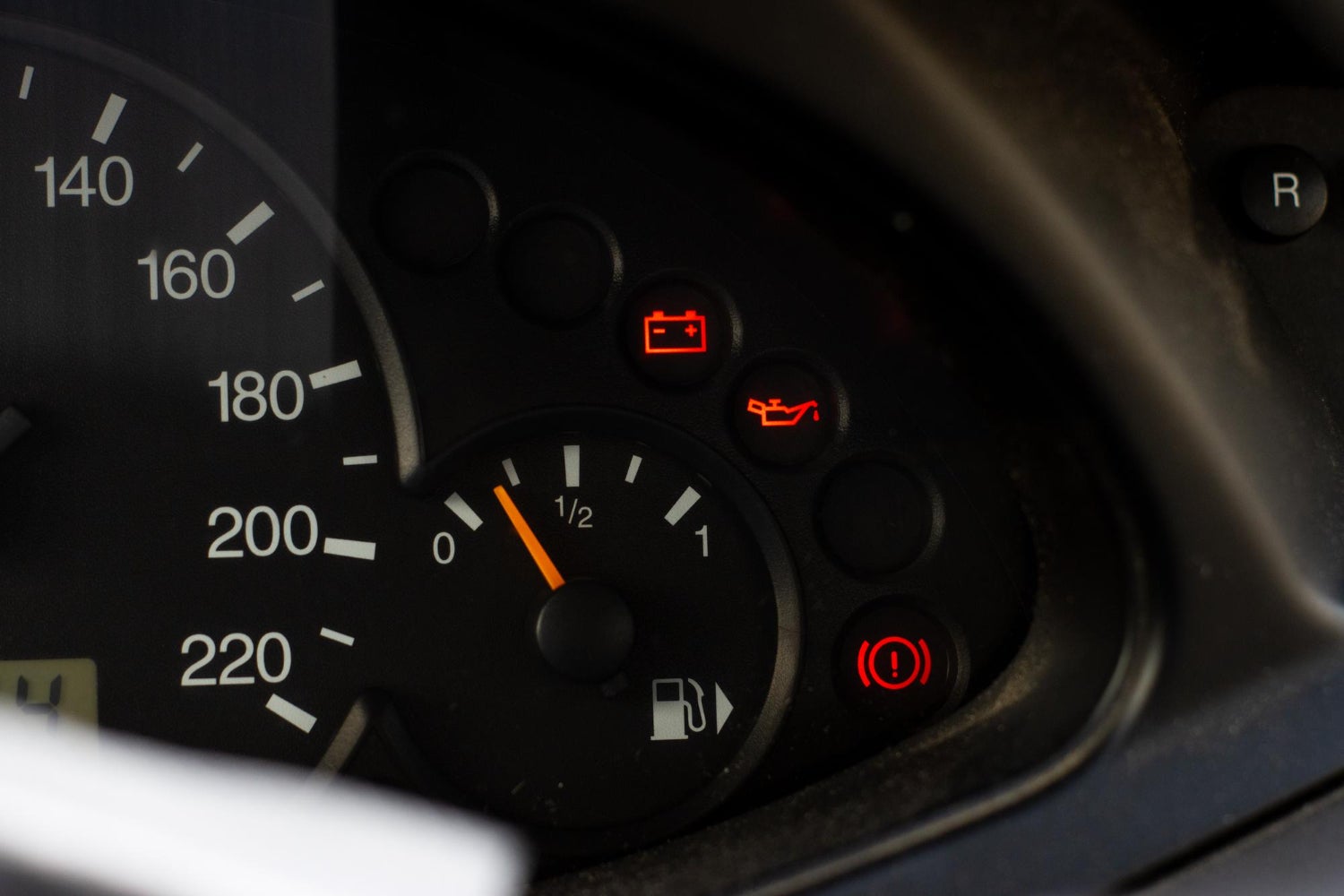
  • Dashboard messages or symbols

  • Vehicle operating conditions when the alert appeared

  • Recent repairs or maintenance

  • Changes in starting, driving, charging, or braking behavior


What Helps Recreate an Intermittent Warning-Light Problem?


Intermittent issues are often diagnosed more effectively when the conditions around the fault are documented clearly. Temperature, speed, engine load, time since startup, road conditions, and accessory use can all help reveal a pattern.


If it is safe to do so, a photo of the warning light or message can be useful. The exact wording or symbol may matter, especially if the alert is no longer active when the vehicle reaches the service drive.


Context can also help, including whether the issue appeared after:


  • A battery replacement

  • A hard start or no-start event

  • Recent maintenance or repair work

  • Aftermarket accessory installation

  • Long vehicle storage

  • A new sound, smell, vibration, or performance change


These details are clues, not automatic causes. They simply make it easier to narrow the diagnostic path.


What Might Be Inspected During Diagnosis?


The answer depends on the exact warning and how the vehicle is behaving. An engine-related alert may call for scan-tool data review and component testing. A brake or ABS message may lead to inspection of the related system and wiring. A battery or charging alert may require testing of battery condition and charging-system operation.


Depending on the concern, diagnosis may include:


  • Visual inspection of wiring, connectors, and related components

  • Battery and charging-system evaluation

  • Fluid-level checks where applicable

  • Scan-tool data review

  • Vehicle-specific testing based on Ford service information


Resetting a light only to hide the symptom does not fix the reason it appeared. The next step depends on the stored information, inspection results, and the exact Ford involved.


When Should You Schedule Service for an Intermittent Warning Light?


You should not assume the issue is permanently resolved just because the light went away. Ryan Ford’s service resources note that warning lights, service messages, starting issues, noises, vibrations, and other changes in how the vehicle operates are reasons to have the vehicle checked.


If you need service support in Sealy, Ryan Ford offers service and parts specials, Ford Mobile Service for certain maintenance needs, and Ford Pickup & Delivery for participating service visits.


A prompt inspection is especially important if:


  • The warning returns

  • The vehicle drives differently

  • Starting becomes inconsistent

  • Braking, steering, or charging behavior changes

  • Multiple warning lights appear together


What Details Should You Bring to a Service Visit?


A clear description can make intermittent electrical or warning-light concerns easier to diagnose. If it is safe, bring a photo of the dashboard alert. It also helps to note when the light first appeared, how often it returns, and whether the vehicle felt different at the time.


Useful details include:


  • The exact warning symbol or message

  • Whether the engine was cold or warm

  • Whether the issue happened while idling, accelerating, braking, or cruising

  • Any recent service or battery replacement

  • New noises, smells, or changes in performance


The more specific the information, the easier it may be to identify a repeatable pattern.


Get Clear Answers for Your Ford


When an alert needs attention, our team can help you take the next practical step. Connect with the Ryan Ford service team in Sealy, TX to discuss the warning light and the information you have noticed. At Ryan Ford, we can also help you identify the appropriate parts for your Ford. If you have questions before moving forward, contact us today.


Questions Sealy Drivers Often Ask


Can I Keep Driving If an Intermittent Warning Light Turns Off?


That depends on the specific light, message, and how the vehicle is operating. If the warning returns or the vehicle behaves differently, prompt inspection is a good idea.


Why Did My Check Engine Light Disappear on Its Own?


The vehicle may no longer detect the condition at that moment. Diagnostic information may still be stored, so the issue should not automatically be treated as resolved.


Will a Diagnostic Test Tell Me Exactly What Needs To Be Replaced?


Not always from the first scan alone. Codes and data guide the diagnosis, but inspection and testing are still used to confirm the underlying cause.


Should I Clear the Warning Light Before Service?


When possible, it is better to preserve the available information. Clearing codes before diagnosis can make an intermittent pattern harder to trace.


How Long Does Intermittent Warning-Light Diagnosis Take?


Timing varies based on the warning, whether the issue can be duplicated, and what testing the vehicle requires. A careful diagnosis is focused on finding the reason for the alert, not simply turning the light off.

Posted in:

Related Posts

F-350 Chassis Cab

Commercial Ford Trucks: Selecting a Chassis Cab for Your Business

How to Choose a Ford Chassis Cab for Your Business The right Ford chassis cab starts with the work the finished truck needs to do. Before choosing a model, think about the body being installed, expected payload, towing needs, crew size, jobsite conditions, wheelbase requirements, and the GVWR range that fits the completed vehicle. For businesses in Sealy and along the I-10 corridor west of Houston, that can lead to very different answers. A service company, contractor, ranch operation, delivery business, and towing-related operation may all need very different chassis, cab, and upfit combinations. That is why the best place to start is the completed work truck, not just the badge on the front fender. If you want to compare current options, start with Ryan Ford’s new commercial inventory, then review the broader market through the used inventory. If you are replacing an existing work truck, Ryan Ford also offers a trade appraisal, and businesses planning their next purchase can begin with the online finance application. Specifications, pricing, availability, equipment, body compatibility, and final ratings can vary by model year, trim, engine, drivetrain, wheelbase, upfit, axle ratio, and configuration, so confirm details for the specific vehicle with Ryan Ford and Ford before making a decision. Which Ford Chassis Cab Models Should You Compare? Ford’s current chassis cab lineup gives commercial buyers several classes to compare. In the 2026 model year, Ford offers Super Duty Chassis Cab models in F-350, F-450, F-550, and F-600 form. Ford inventory and model resources also show XL and XLT trims across the lineup, depending on the model. A practical starting point looks like this: Model Applications & Considerations F-350 Chassis Cab • Good place to start for lighter commercial upfits • Often worth comparing for service-body, utility-body, flatbed, and contractor applications • Final suitability still depends on cab style, engine, drivetrain, wheelbase, and GVWR configuration F-450 Chassis Cab • Worth comparing for heavier-duty service and towing-focused commercial use • Can make sense when the body, trailer, or work equipment demands more than a lighter chassis F-550 Chassis Cab • Often researched for dump, utility, towing, and larger vocational-body needs • Should be matched carefully to upfit weight and axle needs F-600 Chassis Cab • Designed for heavier commercial applications • Worth comparing when body weight, equipment, and duty cycle move beyond lighter setups If you want to review Ford’s current chassis-cab lineup before narrowing your search, it helps to compare the 2026 Super Duty model information, the 2026 Super Duty Chassis Cab towing guide, and the 2026 Ford RV and Trailer Towing Guide. Why Does the Completed Truck Matter More Than the Chassis Alone? A chassis cab is only the starting point. Once a body, tools, mounted equipment, passengers, fuel, accessories, and trailer-related loads are added, the truck’s real-world needs can change quickly. That is why commercial buyers should focus on: The intended body type Installed body weight Tool and cargo weight Passenger count Trailer type and loaded trailer weight Route conditions and worksite access A service body filled with tools can change available payload. So can liftgates, compressors, ladder racks, tanks, winches, drawers, and other equipment. Trailer tongue weight also matters if the truck will tow. How Should You Think About GVWR, Payload, and Towing? GVWR means Gross Vehicle Weight Rating. It is the maximum allowed weight of the truck itself plus the body, fuel, passengers, tools, cargo, and installed equipment. Payload is what remains after the vehicle’s weight is accounted for. GCWR refers to the combined weight of the loaded truck and loaded trailer. For chassis-cab buyers, these terms are not abstract. They shape whether the completed truck actually fits the work. A few reminders matter here: A higher chassis class does not remove the need to calculate finished weight Axle ratings still matter after the body and equipment are installed Towing ratings must match the exact truck and its equipment Upfit weight can reduce available payload quickly Ford’s towing information should be read as configuration-specific guidance, not a blanket promise for every truck in the lineup. Cab style, engine, axle ratio, drivetrain, wheelbase, hitch equipment, and body weight all affect the final answer. How Do Cab, Wheelbase, and Upfit Planning Work Together? Cab choice affects more than seating. A Regular Cab may leave more room for body length. A SuperCab or Crew Cab may better suit a team that travels together. The right answer depends on how the truck will be used during a normal workweek. Wheelbase and cab-to-axle measurements are just as important. A flatbed, service body, dump body, enclosed body, or tow body has to fit the chassis correctly. The upfit provider’s requirements matter as much as Ford’s base chassis information. Before narrowing your search, it helps to bring a simple work-truck outline: Intended body type Estimated installed body weight Tools, equipment, and cargo weight Passenger count Expected trailer weight Space needs for turning, parking, and jobsite access Future equipment plans if the business may grow into a heavier setup That preparation usually leads to a better commercial-truck decision than starting with a model name alone. What Powertrain and Worksite Features Should You Compare? Powertrain choice should support the work, not just the highest output figure. A truck that tows regularly, idles often, or carries heavy equipment all day may need a different setup than one used for lighter service calls or shorter local routes. Commercial buyers should compare: Engine availability for the specific chassis Drivetrain configuration PTO-related needs, if applicable Transmission and equipment compatibility Towing-related technology that may support daily work Available driver-assistance and towing-related systems are designed to assist the driver, but they do not replace attentive driving, proper loading, maintenance, or safe worksite practices. Can Service Planning Affect the Right Chassis-Cab Choice? Yes. Choosing the right work truck is also about how it will be maintained over time. A truck that fits your workload more closely can be easier to keep on schedule for routine service, inspections, and tire or brake wear management. If service convenience matters to your business, Ryan Ford also offers online service scheduling, Ford Mobile Service, and Ford Pickup & Delivery for participating service visits. Find a Chassis Cab That Fits Your Work Browse commercial Ford trucks in Sealy, Texas to compare Ford models and begin narrowing down the right starting point for your operation. At Ryan Ford, our team can help you consider the vehicle details that matter for your planned upfit and daily demands. For help with your next steps, contact us to discuss your needs. Please confirm specifications, equipment, pricing, and availability for the specific vehicle before making a decision. Frequently Asked Questions What Is the Difference Between a Chassis Cab and a Pickup Truck? A pickup usually includes a factory cargo bed. A chassis cab is designed to receive a vocational body or specialized commercial equipment. How Do I Know Which GVWR My Business Needs? Start with the completed vehicle weight, not the empty chassis. Include the body, tools, cargo, fuel, passengers, accessories, and expected trailer-related loads. Can a Chassis Cab Be Used for Towing and Carrying Equipment? Many chassis-cab configurations can be equipped for both, but ratings vary significantly by engine, cab, drivetrain, axle ratio, wheelbase, body weight, and installed equipment. Should I Choose the Upfit Before Choosing the Truck? Yes. The intended body and equipment should be identified early because cab-to-axle length, wheelbase, GVWR, axle ratings, and equipment needs can all affect which chassis is appropriate.

Ford Ownership

Can Ford Ownership Deliver Long-Term Reliability?

Ford Reliability: What Owners Should Consider Long Term If you are asking whether Ford is reliable for the long haul, the practical answer is that long-term reliability depends on the specific vehicle, how well it matches your needs, and whether it receives the maintenance its model year and configuration require. No brand or vehicle delivers the same result for every driver. For drivers in Sealy and along the I-10 corridor west of Houston, that means looking beyond a broad brand reputation. An F-150 used for regular towing may need a different ownership plan than an Explorer used mainly for commuting and family travel. A Maverick XLT Hybrid, an Escape Active, or a Ford Blue Advantage vehicle may also fit different routines in very different ways. Why Is Ford Reliability a Vehicle-Level Question? Long-term reliability is best judged one vehicle at a time. Model year, trim, drivetrain, engine or powertrain, mileage, service history, and daily use all matter. A Ford that fits your routine is usually easier to maintain realistically over time than one that is asked to do more than its configuration was designed to handle. Before choosing a vehicle, it helps to consider: How far you drive in a typical week Whether you tow, haul cargo, or carry work equipment How many passengers and how much cargo space you need Whether your routine includes stop-and-go driving, idling, or long highway trips Which maintenance needs come with your chosen engine or powertrain If you are comparing pre-owned options, Ryan Ford’s used Ford inventory and Ford Blue Advantage selection can help you compare vehicles with different histories, features, and ownership paths. How Do You Choose the Right Ford for Long-Term Ownership? The right vehicle is not simply the one with the most equipment. It is the one that fits your daily demands without placing unnecessary strain on the vehicle over time. A helpful way to compare: Ownership Need Ford Vehicles to Research What to Confirm Work, hauling, or towing F-150 XL, F-150 XLT, Ranger XLT, Super Duty trims Cab, bed, engine, drivetrain, axle ratio, towing equipment, and payload details Family transportation Explorer Active, Explorer ST-Line, Escape Active Seating layout, cargo flexibility, passenger needs, and maintenance planning Frequent commuting Maverick XLT Hybrid, Escape, other efficient Ford options Powertrain, mileage patterns, fuel-use expectations, and routine service needs Used or certified shopping Ford Blue Advantage vehicles Service records, vehicle history, recalls, and applicable coverage terms If you plan to tow or haul often, verify capability details for the exact vehicle. Towing and payload information can vary by model year, trim, engine, drivetrain, cab, bed, axle ratio, package, and installed equipment. The same is true for available technology, driver-assist features, and warranty or coverage details. What Role Does Routine Service Play? Routine service is one of the most practical ways to support long-term reliability. Ford owners should follow the maintenance information for the vehicle’s specific model year and configuration and use the owner’s manual and Ford owner resources as the guide. Depending on the vehicle and how it is used, service may include: Oil and filter service where applicable Tire inspections and rotations Brake inspections Fluid checks Battery testing Filter replacement Inspections related to towing, hauling, heavy cargo, or frequent idling Service needs are not identical for every Ford. Age, mileage, climate, road conditions, and driving habits all affect what the vehicle may need over time. If service convenience matters to your ownership plan, Ryan Ford offers ways to help owners stay on schedule, including the ability to schedule service online, use Ford Mobile Service where available, and request Ford Pickup & Delivery for participating service visits. Why Should You Research the Exact Vehicle Before Buying? Whether you are considering a new Ford, a used Ford, or a Ford Blue Advantage vehicle, it is important to research the exact unit rather than rely on general model information. The VIN, available history reports, maintenance records, and installed equipment can all affect long-term ownership. Before making a decision, we suggest verifying: Model year, trim, drivetrain, engine, or powertrain VIN-specific equipment and installed packages Available maintenance records and vehicle history information Open recalls and applicable coverage details Vehicle-specific capability, condition, and technology features Driver-assist systems may be available on certain Ford vehicles depending on the model year and equipment. These systems are designed to assist in certain driving situations, but they do not replace an attentive driver, safe driving practices, or the driver’s responsibility to control the vehicle. Find a Ford That Fits Your Ownership Goals If you are still asking is Ford reliable, compare Ford Certified vehicles with their available history, warranty coverage, and inspection information in mind. At Ryan Ford, we can help you narrow your search based on the features and ownership priorities that matter to you. Contact us with questions about a specific vehicle, and confirm current pricing, availability, and equipment before making your decision. Frequently Asked Questions How Can I Check a Used Ford’s Maintenance History? Ask to review available vehicle history information and maintenance records. It is also helpful to compare those records with the maintenance schedule in the owner’s manual and check for any open recalls. Where Can I Find the Correct Maintenance Schedule for My Ford? Use the owner’s manual and Ford owner resources for your vehicle’s model year. The recommended schedule may differ by model, powertrain, mileage, and operating conditions. How Can Ford Blue Advantage Help Me Compare Used Ford Options? Ask which Ford Blue Advantage program tier applies to the specific vehicle and request the applicable program documentation. That can help you understand the vehicle’s certification status and any coverage terms that may apply. How Can I Confirm Which Driver-Assist Features a Used Ford Has? Review the VIN-specific equipment information, any available window sticker information, and the owner’s manual for that model year. Feature availability and operation can vary by vehicle, trim, package, and configuration.

Ford F-250

Understanding Ford F-250 Super Duty Powertrains for Towing

Ford F-250 Super Duty Towing Powertrain Overview If towing is one of your main reasons for shopping a heavy-duty truck in Sealy, the right 2026 Ford F-250 Super Duty powertrain depends on more than horsepower or torque alone. Your loaded trailer weight, hitch type, cargo, passengers, axle ratio, cab style, bed length, drivetrain, and factory towing equipment all affect the rating of a specific truck. For a current-model overview, Ford lists four 2026 Super Duty engine choices. The 6.8L gas V8 is rated at 405 horsepower and 445 lb.-ft. of torque. The available 7.3L gas V8 is rated at 430 horsepower and 485 lb.-ft. of torque. The available 6.7L Power Stroke® V8 Turbo Diesel is rated at 475 horsepower and 1,050 lb.-ft. of torque. The available High-Output 6.7L Power Stroke® V8 Turbo Diesel is rated at 500 horsepower and 1,200 lb.-ft. of torque. Those figures give you a useful starting point, but the correct towing answer always comes from the exact truck and the exact trailer you plan to use. If you want to compare available trucks locally, start with Ryan Ford’s new Ford inventory, then review the used truck inventory and Ford Blue Advantage vehicles. Specifications, pricing, availability, and equipment can vary by model year, trim, package, drivetrain, cab, bed, axle ratio, and configuration, so confirm the details for the specific truck with Ryan Ford and Ford before making a final decision. What Powertrains Are Available in the 2026 F-250 Super Duty? Ford’s current Super Duty information gives F-250 shoppers a clear engine lineup to compare. Engine Horsepower Torque Key Details 6.8L Gas V8 405 hp 445 lb.-ft. Standard on F-250 XL 7.3L Gas V8 430 hp 485 lb.-ft. Available on XL and XLT 6.7L Power Stroke® V8 Turbo Diesel 475 hp 1,050 lb.-ft. Designed for heavier-duty towing High-Output 6.7L Power Stroke® V8 Turbo Diesel 500 hp 1,200 lb.-ft. Available on select configurations Ford’s 2026 Super Duty model overview, the F-250 XL model details, and the 2026 Super Duty technical specifications are useful places to review those current engine figures. Why Does the Whole Truck Matter More Than the Engine Alone? A higher torque figure does not mean every diesel F-250 tows the same amount. Ford towing ratings are configuration-specific. That means the final number depends on the truck’s engine, axle ratio, drivetrain, cab, bed, hitch setup, payload, and other factory equipment. For example, one F-250 Crew Cab 4x4 with diesel power may be configured very differently from another F-250 Regular Cab 4x2 with a gas engine. Even though both wear the same nameplate, their towing ratings, payload ratings, and trailer suitability can be very different. That is why the most useful towing comparison includes: Your trailer’s fully loaded weight, not just its empty weight Conventional tongue weight or fifth-wheel pin weight Passenger and cargo weight in the truck Hitch type and trailer brake setup Typical route, grades, and towing frequency Ford’s 2026 Super Duty towing guide makes the same point. Maximum towing figures apply only to properly equipped vehicles and vary based on configuration, cargo, accessories, and the number of passengers. Should You Choose a Gas or Diesel F-250? That depends on how often you tow, how heavy the trailer is, and how you use the truck the rest of the week. A gas F-250 can make sense if your work or recreation involves lighter trailers, occasional towing, or a preference for a gas-engine setup. The 6.8L gas V8 gives you the standard starting point, while the available 7.3L gas V8 is worth comparing if you want added gas-engine output. A diesel F-250 may deserve a closer look if your routine includes frequent towing, heavier equipment trailers, or longer hauling distances. The available 6.7L Power Stroke® diesel and the High-Output version bring much higher torque figures, but the truck still has to be matched to the trailer correctly. For many Sealy-area towing decisions, the better question is not simply gas or diesel. It is which exact truck fits the trailer, the cargo, the route, and the frequency of use. What Towing Equipment Should You Compare With the Powertrain? A capable engine is only part of a safe towing setup. The rest of the truck matters just as much. Trailer brakes, hitch equipment, mirrors, tire choice, cargo placement, and payload all affect the real towing experience. Ford also offers available towing-focused technology on current Super Duty trucks, including features such as Pro Trailer Backup Assist™, Pro Trailer Hitch Assist™, and Onboard Scales with Smart Hitch on certain configurations. These systems are designed to assist the driver, not replace attentive driving, proper loading, or correct trailer setup. If you expect to tow often, it helps to review: Hitch type and trailer connection requirements Trailer brake controller availability Mirrors and visibility needs Payload label information Tire and wheel setup Bed length if fifth-wheel or gooseneck towing is part of the plan If you are trading out of your current truck before moving into a different towing setup, Ryan Ford’s trade appraisal tool can help you prepare for the next step. How Should You Confirm the Right F-250 Setup? The best way to confirm a towing setup is to compare the exact truck, the exact trailer, and the exact equipment together. Door-jamb labels, the towing guide, the owner’s manual, and the truck’s installed equipment matter more than a broad lineup maximum. This is especially important for shoppers comparing: Regular Cab, SuperCab™, and Crew Cab layouts 4x2 and 4x4 drivetrains Different bed lengths Gas and diesel powertrains Conventional towing versus fifth-wheel or gooseneck towing If ownership support matters after the purchase, Ryan Ford also offers online service scheduling, Ford Mobile Service, and Ford Pickup & Delivery for participating service visits. Compare Powertrain Options With Confidence Review the Ford F-250 Super Duty in Katy to compare available configurations and focus on the equipment that fits your towing needs. Our team at Ryan Ford can help you narrow down the powertrain, cab, bed, and available towing equipment to consider. When you are ready to discuss your truck needs, contact us for personalized assistance. Frequently Asked Questions Which 2026 F-250 Engine Has the Most Torque? The available High-Output 6.7L Power Stroke® V8 Turbo Diesel has the highest published torque figure in the 2026 F-250 lineup at 1,200 lb.-ft. Torque alone does not determine the truck’s final towing rating. Is the 7.3L Gas V8 Better Than the 6.8L Gas V8 for Towing? Not automatically. The 7.3L gas V8 has higher published output, but the better choice depends on the exact truck configuration, trailer weight, payload needs, and how often you tow. Do I Need Diesel for Every Heavy Trailer? Not always. Some gas-engine F-250 configurations may fit certain towing needs well. The correct answer depends on the exact trailer, loading, route, and the truck’s published rating. Why Should I Bring My Trailer Details Before Comparing Trucks? Because loaded trailer weight, tongue or pin weight, passengers, cargo, hitch equipment, and route conditions all affect whether a specific F-250 configuration fits your towing needs.