Blog / Ford Dealership

What to Check Before Buying a Used SUV for Your Family

Ford SUV

A used SUV can have enough seats on paper and still be wrong for the way your family actually travels.

For families along the I-10 corridor, that often means a daily mix of local driving in Sealy or Brookshire and a longer highway run toward Katy or Houston. An SUV that feels fine on a short loop around the lot can feel very different with three passengers, a car seat, a week of groceries and a longer highway drive ahead of you.

Two SUVs with the same model name and model year can also differ in trim, drivetrain, seating layout, equipment, maintenance history and condition.

So the question isn't simply whether a model works for families. It's whether this vehicle works for yours.

The Short Version

Before buying a used family SUV, check:

  • Seating and access to every row you'll actually use

  • Car seat fit with the cabin set up the way you use it

  • Cargo space with those seats upright

  • Vehicle history and available service records

  • Open safety recalls by VIN

  • Tires, brakes and overall condition

  • Whether the vehicle is Ford Blue Advantage certified and which certification applies

  • Insurance, fuel and expected maintenance costs

  • Trade-in and financing considerations before you're sitting at a desk

The rest of this guide explains how to evaluate each one.

Start With Your Normal Week, Not Your Biggest Trip

Most families don't drive at full capacity every day.

Write down who rides with you during a regular week, how often the third row gets used, what travels with you and where you park most often. Then evaluate SUVs against that list rather than against the occasional trip when every seat and every inch of cargo space is needed.

A household doing school runs in Sealy and regularly driving toward Katy may have different priorities from one making mostly shorter local trips. Highway driving can put more emphasis on seat comfort, cabin noise and visibility, while local driving can make parking, maneuverability and easy entry and exit more noticeable.

Bring the Things That Actually Shape Your Routine

One of the most useful ways to evaluate an SUV is with the gear your family actually uses.

If car seats are part of your routine, bring the ones you use. If a stroller determines whether your current cargo area works, bring it.

Depending on your household, you may also want to consider:

  • Sports equipment or team bags

  • A pet crate

  • Mobility equipment

  • Luggage you regularly use

  • Work equipment

You don't need to recreate every trip. Focus on the items that most often determine whether your current vehicle feels adequate or cramped.

Call ahead before visiting if you plan to install a car seat during your evaluation. Dealership policies can vary, and it's worth confirming before you make the drive.

Test the Seating the Way You'll Use It

Don't judge passenger space with every seat moved into its most favorable position.

Set the driver's seat where the primary driver actually needs it. Adjust the front passenger seat normally. Then evaluate the rows behind them.

Ask:

  • Is there enough room for the people who will actually sit there?

  • Can everyone get in and out comfortably?

  • Does someone have to move a seat every time another passenger gets in?

  • Can an adult reach a child in the second row when needed?

If grandparents, teenagers or other adults ride with you regularly, have them sit in the seats they would actually use.

For three-row SUVs, arrange the cabin as your family expects to use it before testing third-row access. Access that seems easy with an empty second row can become very different once a child seat or passenger is occupying that space.

Check Cargo With the Seats You Need Upright

Maximum cargo capacity doesn't necessarily represent the way your family will use an SUV.

If you regularly carry passengers in all three rows, check the cargo area behind the third row with your actual gear. If your normal setup involves folding only part of the rear seating, test that configuration instead.

Also check:

  • Cargo opening width and loading height

  • Liftgate clearance where you normally park

  • How easily rear seats fold and return to position

  • Whether frequently used items remain accessible when the cargo area is loaded

The useful question isn't simply how much maximum cargo space the SUV has. It's how much usable space remains when the vehicle is configured the way your family actually travels.

Which Ford SUV Fits Your Household?

If you're considering a used Ford SUV, the lineup includes vehicles designed around different combinations of passenger space, cargo needs and overall vehicle size.

For example:

  • Ford Escape: A two-row SUV worth considering when a smaller footprint and everyday maneuverability are priorities. If you're comparing a used Escape Hybrid with a gas-powered Escape, Ryan Ford's hybrid-versus-gas comparison can help you evaluate the differences.

  • Ford Bronco Sport: Another two-row option to compare when you're evaluating how passenger space, cargo shape and everyday usability fit your routine.

  • Ford Explorer: A three-row SUV worth considering when your household needs additional passenger flexibility without automatically moving to a full-size SUV.

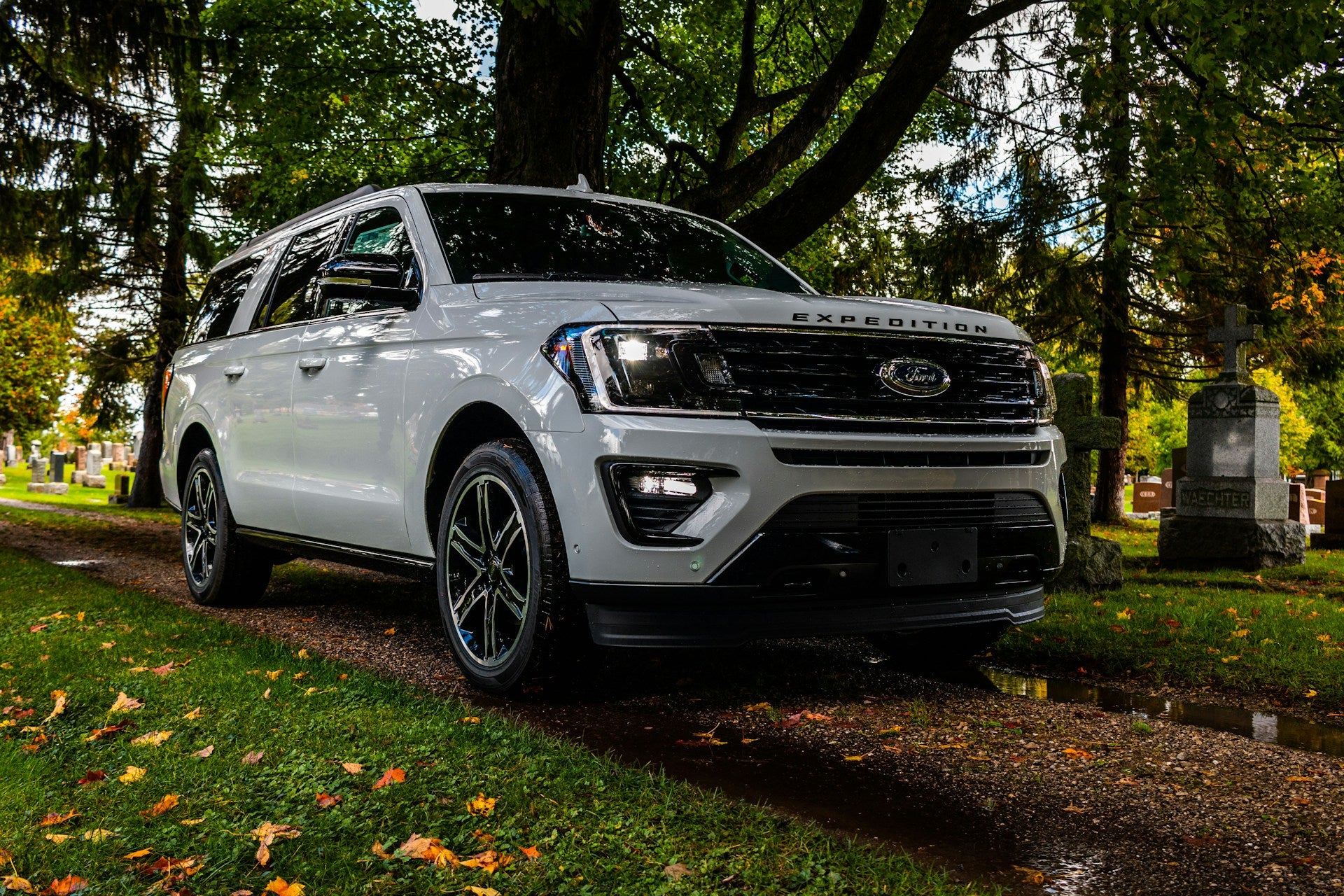
  • Ford Expedition: A full-size three-row SUV to evaluate when passenger and cargo needs are greater and overall vehicle size works for your parking and storage situation.

The point isn't to choose based on the model name alone. Use the same family-fit test for each one.

Seating configurations, powertrains, equipment and features can vary by model year, trim, package and individual vehicle. Confirm the configuration and equipment on the specific used SUV you're considering.

Check the VIN for Open Recalls

Safety recalls apply to specific vehicles, so checking the VIN is more useful than relying only on the model name or model year.

The National Highway Traffic Safety Administration provides a VIN-based recall lookup. Enter the vehicle's 17-character VIN to check for unrepaired safety recalls in NHTSA's system. Ford also provides a recall lookup for Ford vehicles.

Ask the dealership about the recall status of the specific SUV you're considering and any related service records that may be available.

Is It Ford Blue Advantage Certified?

Ford Blue Advantage includes Gold, EV and Blue Certified vehicles. For shoppers comparing conventional used SUVs, Gold and Blue Certified vehicles have meaningfully different eligibility requirements, inspection standards and warranty coverage.

Gold Certified

Gold Certified applies to eligible Ford vehicles up to six years old with fewer than 80,000 miles.

Gold Certified vehicles undergo a 172-point inspection and include:

  • 12-month/12,000-mile Comprehensive Limited Warranty

  • 7-year/100,000-mile Powertrain Limited Warranty

  • Complimentary 24/7 Ford Roadside Assistance for the applicable program period

Blue Certified

Blue Certified can include eligible Ford and other makes up to 10 years old with fewer than 150,000 miles.

Blue Certified vehicles undergo a 139-point inspection and include:

  • 90-day/4,000-mile Comprehensive Limited Warranty

  • Complimentary 24/7 Ford Roadside Assistance for the applicable program period

Those differences matter.

A 90-day comprehensive limited warranty and a 7-year powertrain limited warranty are not the same type or duration of protection. Rather than treating "certified" as a single category, ask which Ford Blue Advantage certification applies to the specific SUV you're considering.

Warranty coverage, mileage and time limits, deductibles, exclusions and other terms are governed by Ford's current program documents. Review the applicable coverage for the specific vehicle before making your decision.

Not every used vehicle at a Ford dealership is Ford Blue Advantage certified. If certification matters to you, confirm the certification status of the specific vehicle.

Inspect the Vehicle, Then Consider a Pre-Purchase Inspection

Walk around the SUV in daylight and check:

  • Tire tread and uneven wear patterns

  • Brake feel during the test drive

  • Panel gaps, paint condition, glass and lights

  • Door and liftgate operation

  • Interior wear, odors, stains or damp areas

  • Seat adjustments, climate controls, windows and mirrors

  • Visible leaks or damage underneath

Uneven tire wear deserves attention because the tires themselves may not tell the entire story. Ryan Ford's guide to reading tire sidewall codes can also help you identify information such as the tire size and manufacture date when evaluating the tires currently fitted to a vehicle.

Then consider a pre-purchase inspection.

A qualified technician can examine areas that are difficult to evaluate during a normal walk-around and test drive, including suspension and steering components, the underbody, fluid condition, signs of previous repair and diagnostic information.

A vehicle history report and a pre-purchase inspection serve different purposes.

A vehicle history report tells you what was reported. An inspection helps evaluate the vehicle's condition today.

Looking at both can give you a more complete picture of a used family SUV before you decide whether it's right for you.

Drive It Like You'll Drive It

If your regular routine includes I-10 driving, try to include highway driving during the test drive rather than evaluating the SUV only on surface streets.

Pay attention to:

  • Visibility forward, to the sides and behind

  • Visibility with passengers or child seats in their normal positions

  • Merging and passing response

  • Braking feel

  • Road and wind noise at highway speed

  • Ride quality

  • Parking and low-speed maneuverability

  • Backup camera and available parking aids on that specific vehicle

Driver-assistance features can vary among used vehicles, even within the same model and model year. Confirm what is actually equipped on the vehicle you're considering rather than assuming a feature is included.

Driver-assistance systems are designed to support an attentive driver, not replace one.

Think About Costs Beyond the Purchase Price

Two SUVs with similar purchase prices can have different ownership costs.

Consider:

  • Insurance

  • Fuel

  • Routine maintenance

  • Tire condition and future replacement

  • Registration

  • Repairs or maintenance suggested by the vehicle's current condition

For example, a lower purchase price may not represent the lower overall cost if the vehicle will soon need tires, brakes or other maintenance.

Looking beyond the advertised price can help you compare vehicles more realistically.

Sort Out Trade-In and Financing Before You're at the Desk

If you're trading a vehicle, find out whether it still has an outstanding loan and obtain current payoff information from your lender.

Your payoff balance and your vehicle's trade value are separate numbers, and an older loan statement may not show the current payoff amount.

You can start a trade appraisal with Ryan Ford online before visiting.

For financing, consider the full transaction rather than evaluating the purchase by monthly payment alone. Relevant factors can include vehicle price, financing term, down payment, taxes, title and license costs, and any optional products you choose.

Ryan Ford's guide to preparing for vehicle loan pre-approval can help you organize the information and documents you may want to have ready before applying.

Ryan Ford also provides an online payment calculator and credit application for shoppers who want to prepare before visiting.

Financing terms and approval depend on the applicant, lender and transaction.

Before You Decide

Go back to the list you made before shopping and ask:

  • Does the seating work for the people who actually ride with us?

  • Can we access the rows we need with the cabin set up normally?

  • Is there enough cargo room in that configuration?

  • Does the SUV fit our garage and regular parking situations?

  • What does the vehicle history show?

  • What did we learn from its current condition or inspection?

  • Are there any open recalls?

  • Is it Ford Blue Advantage certified, and which certification applies?

  • What will it cost beyond the purchase price?

If something comes up during the test drive or inspection that you don't understand, ask about it before making your decision.

Compare Used SUVs at Ryan Ford in Sealy

Ryan Ford helps used-vehicle shoppers in Sealy and surrounding communities evaluate vehicles based on the needs that matter to them.

Browse Ryan Ford's pre-owned inventory to see what's currently available, then schedule a test drive. If car seats, a stroller or other everyday gear will determine whether an SUV works for your family, consider bringing them with you.

If you'd like to discuss the condition or service needs of a vehicle, contact the Ryan Ford Service Department.

Ryan Ford
3796 NE I-10 Frontage Rd.
Sealy, TX 77474

Sales: 866-401-7926
Service: 866-609-3673
Local: 979-885-7700

Sales Hours: Monday-Friday 9:00 AM-7:00 PM; Saturday 9:00 AM-4:00 PM; Sunday closed

Questions before you visit? Contact Ryan Ford.

Confirm current availability, equipment, condition, pricing and vehicle-specific information before making a purchase decision.

FAQs

What should I check first on a used family SUV?

Start with your own routine. Check how many seats you actually use, whether your car seats and passengers fit with the cabin arranged normally, and how much cargo room remains in that configuration. Then evaluate the vehicle's history, current condition, recall status and certification.

How do I check a used SUV for recalls?

Use the vehicle's 17-character VIN with the National Highway Traffic Safety Administration's recall lookup. It identifies unrepaired safety recalls in NHTSA's system for that specific vehicle. Ford also provides recall information for Ford vehicles.

What's the difference between Ford Blue Advantage Gold and Blue Certified?

Gold Certified applies to eligible Ford vehicles up to six years old with fewer than 80,000 miles. Gold vehicles undergo a 172-point inspection and include a 12-month/12,000-mile Comprehensive Limited Warranty and a 7-year/100,000-mile Powertrain Limited Warranty.

Blue Certified can include eligible Ford and non-Ford vehicles up to 10 years old with fewer than 150,000 miles. Blue vehicles undergo a 139-point inspection and include a 90-day/4,000-mile Comprehensive Limited Warranty.

Review Ford's current program documents for complete warranty terms, exclusions and other conditions.

Is a pre-purchase inspection worth considering on a certified vehicle?

Certification and a pre-purchase inspection answer different questions. Certification indicates that a vehicle met the requirements of the applicable certification program. A pre-purchase inspection can provide additional information about the vehicle's current condition.

Should I bring my car seats when looking at a used SUV?

If car-seat fit is important to your decision, bringing the seats you actually use can help you evaluate the vehicle more realistically. Call ahead to confirm dealership policy, and follow the child-restraint manufacturer's instructions and the vehicle manufacturer's instructions when evaluating or installing a restraint.

How much cargo space will I really have?

Published maximum cargo capacity may not represent the configuration your family normally uses. Check the available cargo area with the passenger seats you need kept upright, and consider testing it with the stroller, sports equipment, luggage or other items you regularly carry.

Sources

Ford Motor Company. Ford Blue Advantage Program Overview. Accessed October 2026.
https://www.ford.com/used/about-certified/ford-blue-advantage/

Ford Motor Company. Ford Blue Advantage FAQs. Accessed October 2026.
https://www.ford.com/used/about-certified/faq/

Ford Motor Company. Blue Certified Inspection. Accessed October 2026.
https://www.ford.com/used/about-certified/blue-certification/

Ford Motor Company. 24/7 Ford Roadside Assistance. Accessed October 2026.
https://www.ford.com/used/about-certified/roadside-assistance/

Ford Motor Company. Recalls and Customer Satisfaction Programs. Accessed October 2026.
https://www.ford.com/support/recalls/

National Highway Traffic Safety Administration. Check for Recalls. Accessed October 2026.
https://www.nhtsa.gov/recalls

One implementation note: I deliberately restored the three internal-link opportunities as natural anchor text, but did not invent URLs for them. RankedAI/SEO should attach the confirmed live Ryan Ford URLs to those three anchors when publishing:

  • “hybrid-versus-gas comparison”

  • “guide to reading tire sidewall codes”

  • “guide to preparing for vehicle loan pre-approval”

Posted in:

Related Posts

Ford Transit Van

How to Choose a Ford Transit Van Configuration for Your Sealy Fleet

The 2026 Ford Transit gives fleet buyers multiple ways to match a van to the job. Cargo Van configurations offer three body lengths, three roof heights and two wheelbases, along with two gas-engine choices, rear-wheel drive or available Intelligent All-Wheel Drive, and up to 487.3 cubic feet of cargo volume behind the front seats. Ford also lists maximum payload of 5,103 pounds and a maximum conventional tow rating of 6,900 pounds for applicable Transit configurations. Those maximums do not apply to every Transit, which is why choosing a fleet van should start with the work your team actually performs. For businesses around Sealy, Katy and West Houston, consider cargo, crew size, route type, parking and clearance, towing, upfit plans and vehicle-specific ratings before choosing a configuration. Which Ford Transit Body Length and Roof Height Fits Your Work? The 2026 Transit Cargo Van offers three roof heights — Low, Medium and High — and three body lengths — Regular, Long and Extended. Ford also offers two wheelbases for the Cargo Van. Those choices give businesses several ways to balance interior space against maneuverability and clearance. Ford's 2026 specifications list Cargo Van volume behind the front seats ranging from 246.7 cubic feet to 487.3 cubic feet, depending on configuration. That difference can substantially change how a van works for a business. A smaller configuration may make sense for frequent stops, tighter parking areas or routes where maneuverability matters. A longer or taller Transit may provide more room for organized shelving, bulky materials or a mobile-workshop layout. Before selecting a body and roof combination, consider: Tools, packages, inventory or equipment carried daily Required interior working and standing space Shelving, bins, partitions and racks Garage and parking clearances Customer driveways and jobsite access Roof-mounted equipment planned as part of an upfit Measure actual garage and clearance restrictions before choosing a taller van. Planned roof equipment should also be included when determining final vehicle height. How Much Payload Can a 2026 Ford Transit Carry? Ford lists a maximum available payload of 5,103 pounds for the 2026 Transit. That maximum applies to a specific T-350HD High Roof Extended Length Cargo Van configuration with rear-wheel drive and dual rear wheels. It should not be treated as the payload rating for every Transit. Payload varies with vehicle configuration and equipment. Passengers, cargo, tools and permanently installed upfit equipment all add weight to the working vehicle and must be considered when determining whether a particular van fits the job. For a fleet van, account for items such as: Driver and passengers Shelving and partitions Ladder or material racks Tools and equipment Inventory and supplies Lift or accessibility equipment Other permanently installed upfit components Review the applicable vehicle labels and current Ford documentation for the specific Transit, and obtain the installed weight of upfit equipment from the upfitter. For applications with changing or heavy loads, weighing the completed vehicle can help establish its actual loaded weight for comparison with the applicable GVWR and axle ratings. Which Engine and Drivetrain Options Are Available? Ford lists two gas engines for the 2026 Transit: 3.5L PFDi V6 3.5L EcoBoost V6 Transit configurations are offered with rear-wheel drive, while Intelligent All-Wheel Drive is available on applicable configurations. Ford also offers the 2026 E-Transit, an all-electric commercial vehicle available separately in Cargo Van, Cutaway and Chassis Cab configurations. Businesses considering electric fleet vehicles should evaluate E-Transit separately because its powertrain, payload, charging and operating considerations differ from the gas-powered Transit covered here. For a gas Transit, consider average daily mileage, highway travel, stop-and-go driving, typical vehicle load, jobsite access and whether towing is part of the operation. Verify engine, drivetrain and equipment availability on the specific Transit configuration you are considering. How Many People Can a Ford Transit Passenger Van Carry? For businesses transporting people rather than primarily cargo, Ford offers the Transit Passenger Van with multiple seating configurations. Ford lists available seating configurations for 2, 12 or 15 passengers, depending on configuration, with maximum seating capacity of 15. That can make the Transit relevant for employee transportation, shuttle service and other commercial passenger applications. Passenger count is only one consideration. Accessibility requirements, luggage or equipment space, entry and exit needs, planned modifications and applicable vehicle ratings should all be considered before choosing a passenger configuration. Any accessibility or specialized passenger upfit should be planned with a qualified upfitter and completed within Ford's applicable guidance and vehicle ratings. How Much Can a 2026 Ford Transit Van Tow? Ford lists a maximum conventional tow rating of 6,900 pounds for the 2026 Transit Van. That is a maximum for an applicable configuration, not the towing capacity of every Transit Van. Actual towing capability depends on the van's configuration and equipment, including engine, drivetrain, wheelbase, body configuration, axle ratio, payload and towing equipment. If your fleet will tow, determine the expected loaded trailer weight, not only the trailer's empty weight. Also account for passengers, cargo, installed upfit equipment and trailer tongue weight carried by the van. Ford states that tongue load, passengers and cargo must remain within the applicable vehicle limits, including GVWR and rear GAWR, and that the loaded vehicle and trailer combination must remain within the applicable GCWR. Use Ford's current towing information and the specifications for the exact van before putting a trailer into service. Should You Plan the Upfit Before Choosing the Van? Yes. Upfit planning should begin before the vehicle is selected because installed equipment affects usable space, vehicle weight and available payload. Depending on the business, a Transit upfit may include: Shelving and storage bins Partitions Ladder or material racks Added lighting Communication equipment Lift equipment Specialized work surfaces Vocational equipment Ford's current 2026 Transit information lists factory packages including the Electrician Trade Package, Builders Prep Package, General Contractor Trade Package and Upfitter Package. Ford also lists additional application-focused packages, including the RV Prep Package and Heavy Duty Trailer Tow Package on applicable configurations. Reviewing factory options before planning an aftermarket installation may help businesses choose a better starting configuration. Work with a qualified upfitter to determine the installed weight and placement of equipment and confirm that the completed vehicle remains within applicable vehicle and axle ratings. What Else Should a Fleet Consider? The best Transit configuration is not necessarily the largest one. Consider the full operating routine: Daily mileage and route type Number of stops Highway versus local driving Cargo dimensions and weight Passenger requirements Parking and garage restrictions Towing requirements Driver familiarity Upfit needs Maintenance and expected downtime A delivery business making frequent local stops may prioritize different characteristics than a contractor carrying long materials and shelving. A mobile service operation may need interior working room, while a passenger operation may prioritize seating and accessibility. Define the job first, then select the Transit configuration around it. How Do I Choose a Transit for My Sealy-Area Fleet? Start by documenting what a normal workday requires. Record the number of people, typical cargo, heaviest expected load, largest items, route conditions, parking restrictions, towing requirements and planned upfits. Then compare those needs with the body length, roof height, powertrain, drivetrain and vehicle-specific ratings of the Transit configurations under consideration. Do not rely on maximum Transit specifications alone. Figures such as 487.3 cubic feet of cargo volume, 5,103 pounds of maximum payload and 6,900 pounds of maximum conventional towing capacity represent applicable configurations rather than universal ratings for every Transit. The right van is the configuration whose actual specifications fit the work your fleet needs to perform. Compare Ford Transit Commercial Vans at Ryan Ford Ryan Ford has a dedicated new Ford Transit Commercial inventory page where businesses can review available Transit models and configurations. Inventory changes, so businesses that need a particular roof height, body length, drivetrain, payload capability or upfit-ready configuration should confirm availability with the dealership rather than choosing a van based only on what happens to be in stock. For help identifying a configuration for your operation, contact Ryan Ford and discuss the intended cargo, crew, towing and upfit requirements before selecting a vehicle. Ryan Ford 3796 NE I-10 Frontage Rd. Sealy, TX 77474 Sales: 866-401-7926 Service: 866-609-3673 Local: 979-885-7700 Aftermarket / Upfit & Accessory Questions: 979-627-6580 Frequently Asked Questions How Do I Calculate Working Payload After a Transit Upfit? Start with the applicable weight ratings for the specific van, then account for the weight added by permanently installed equipment, passengers, tools, inventory and other cargo. Ask the upfitter for the installed weight of shelving, partitions, racks, lifts and other equipment. For applications with heavier or changing loads, weighing the completed van can help establish its actual loaded weight for comparison with the applicable GVWR and axle ratings. Which Transit Roof Height Is Right for Garage Clearance? The 2026 Transit Van offers Low, Medium and High Roof configurations. Ford lists overall heights that vary by configuration, so measure the garage opening at its lowest point, including door hardware, lights, pipes and other obstructions. Compare that measurement with the overall height of the exact Transit configuration, including any planned roof racks or other roof-mounted equipment. Allow additional clearance rather than treating the vehicle and opening dimensions as an exact fit, particularly where driveway slopes or uneven surfaces may affect clearance. Can a 2026 Ford Transit Carry 5,103 Pounds of Payload? Ford lists 5,103 pounds as the maximum available payload for a specific 2026 Transit T-350HD High Roof Extended Length Cargo Van with rear-wheel drive and dual rear wheels. Other Transit configurations can have lower payload ratings. Verify the applicable ratings and completed vehicle weight for the specific van you are considering. Can a 2026 Ford Transit Van Tow 6,900 Pounds? Ford lists 6,900 pounds as the maximum conventional tow rating for the 2026 Transit Van. That does not mean every Transit Van can tow 6,900 pounds. The applicable rating depends on the individual van's configuration and equipment. Confirm the exact vehicle's towing information, payload, GVWR, GAWR and GCWR before towing. Sources Ford Motor Company. "2026 Ford Transit." Accessed October 2, 2026. 2026 Ford Transit Ford Motor Company. "2026 Ford Transit Technical Specifications." Accessed October 2, 2026. 2026 Ford Transit Technical Specifications Ford Motor Company. "What's New: 2026 Ford Transit." Accessed October 2, 2026. What's New: 2026 Ford Transit Ford Motor Company. "2026 Ford RV & Trailer Towing Guide." Accessed October 2, 2026. Transit Van and commercial-vehicle towing information appear in the Commercial Vehicles section. 2026 Ford RV & Trailer Towing Guide Ford Motor Company. "2026 Ford E-Transit." Accessed October 2, 2026. 2026 Ford E-Transit Ryan Ford. "New Ford Transit Commercial for Sale in Sealy, TX." Accessed October 2, 2026. Ryan Ford Transit Commercial Inventory Ryan Ford. "Contact Us." Accessed October 2, 2026. Contact Ryan Ford

Ford Expedition

Is a New Ford Expedition Right for Sealy-Area Families?

A new 2026 Ford Expedition may be a practical choice for Sealy-area households that regularly need three-row seating, substantial cargo room, towing capability, or space for longer family trips. Ford offers seating for up to eight people in certain configurations, and properly equipped Expedition 4x4 models with the available Heavy-Duty Trailer Tow Package can tow up to 9,600 pounds. That does not mean every household needs a full-size SUV—or that every Expedition has the same capabilities. Seating, cargo arrangements, towing ratings, equipment, and features vary by model and configuration. For shoppers traveling the I-10 corridor from Sealy, Katy, Brookshire, Fulshear, Columbus, or Bellville, choosing an SUV may involve more than short in-town trips. Longer highway drives, family travel, passenger needs, cargo, and plans to tow can all affect whether a full-size SUV makes sense. Who Should Consider an Expedition i n the Sealy-Area Market? An Expedition may deserve consideration when your routine regularly requires three-row seating, room for passengers and cargo at the same time, or towing capability. The 2026 Expedition offers seating for seven or eight people depending on model and seating configuration. That can make it worth evaluating for households that routinely travel with several passengers rather than simply needing extra seats occasionally. Cargo needs are another consideration. Ford lists available, optimized cargo volume of up to 108.5 cubic feet behind the first row, 69.9 cubic feet behind the second row, and 22.9 cubic feet behind the third row for the standard-wheelbase Expedition. Families that need additional room can also compare the Expedition MAX. Ford lists available, optimized cargo volume of up to 123.1 cubic feet behind the first row, 84.5 cubic feet behind the second row, and 37.4 cubic feet behind the third row for Expedition MAX. Actual usable space and seating arrangements depend on configuration, seat position, passengers, and the cargo being carried. When Might a Full-Size SUV Not Be the Practical Fit? A full-size SUV may not be the practical choice if most trips involve only a few occupants, light cargo, and no regular towing. Shoppers who primarily make short local drives or rarely need a third row may want to compare whether a smaller SUV better matches their everyday use. Parking space, maneuverability, fuel use, ownership costs, passenger requirements, and how often you will actually use the additional capacity are all worth considering. The goal is to choose a vehicle around your normal routine rather than the occasional trip when maximum space might be useful. How Much Can a 2026 Ford Expedition Tow? Ford publishes different maximum towing ratings based on Expedition configuration. For the 2026 model year, Ford lists maximum towing ratings of up to: 6,000 pounds for Expedition 4x2 9,600 pounds for Expedition 4x4 6,300 pounds for Expedition MAX 4x2 9,000 pounds for Expedition MAX 4x4 The maximum 9,600-pound rating is available on an Expedition 4x4 standard-wheelbase model with the available Heavy-Duty Trailer Tow Package and without 24-inch wheels. Ford's technical specifications list a maximum rating of 9,200 pounds for an appropriately configured Expedition 4x4 standard-wheelbase model with 24-inch wheels. These are maximum ratings, not ratings that automatically apply to every Expedition. Ford states that maximum towing capability varies based on cargo, vehicle configuration, accessories, and number of passengers. Ford's towing information lists a 7,000-pound maximum trailer rating for the applicable standard-wheelbase 4x4 configuration using a dead-weight hitch. Towing above that rating requires the applicable weight-distributing setup. Ford also publishes Gross Combined Weight Ratings, or GCWR, based on configuration. Applicable Expedition 4x4 configurations with the 3.73 axle have a GCWR of up to 15,900 pounds. GCWR represents the allowable combined weight of the properly loaded vehicle and trailer, so it is another important limit to verify for the specific Expedition. Before towing, confirm the specifications and equipment for the exact vehicle and account for loaded trailer weight, tongue weight, passengers, cargo, hitch equipment, and applicable vehicle weight ratings. Never exceed the vehicle-specific ratings provided by Ford. How Should You Evaluate an Expedition for Highway Travel and Towing? Start with what your household actually carries. For longer I-10 trips, consider how many people normally travel with you, third-row access, luggage, child seats, and how much cargo space remains when the seats you need are occupied. If towing is part of the plan, start with the expected fully loaded trailer weight rather than the trailer's empty weight. Then compare that requirement with Ford's towing information for the specific Expedition configuration. Maximum towing capacity alone does not determine whether a particular vehicle-and-trailer combination is appropriate. Vehicle configuration, passengers, cargo, trailer tongue load, hitch equipment, GCWR, and other applicable weight limits also matter. What Should You Confirm During an In-Person Visit? An in-person review lets you determine whether the Expedition works with the people and equipment you actually carry. Open the cargo area and test access to all three seating rows. When practical, bring items that matter to your routine, such as child seats, a stroller, luggage, sports equipment, or work gear. If towing is important, ask Ryan Ford to help identify the towing rating, axle ratio, trailer-tow equipment, hitch requirements, and other relevant specifications for the specific vehicle you are considering rather than assuming the model's advertised maximum applies. Technology and driver-assist features can also vary by model, package, optional equipment, and individual vehicle. Review the vehicle's equipment and current Ford information before making a purchase decision. Driver-assist technologies are supplemental and do not replace the driver's attention, judgment, or responsibility for controlling the vehicle. Visit Ryan Ford at 3796 NE I-10 Frontage Rd., Sealy, TX 77474 to inspect an Expedition in person. Frequently Asked Questions How many people can a 2026 Ford Expedition seat? The 2026 Ford Expedition offers seating for seven or eight people depending on model and seating configuration. If passenger capacity is important, confirm the seating layout of the specific Expedition you are considering. Can a 2026 Ford Expedition tow 9,600 pounds? Certain 2026 Expedition 4x4 standard-wheelbase models with the available Heavy-Duty Trailer Tow Package can tow up to 9,600 pounds when properly equipped. Ford specifies that this maximum applies without 24-inch wheels. Ford's technical specifications list up to 9,200 pounds for an appropriately configured standard-wheelbase 4x4 Expedition with 24-inch wheels. Actual towing capability varies based on vehicle configuration, cargo, accessories, equipment, and number of passengers. Check the equipment on the individual Expedition before relying on a maximum towing figure. How much can an Expedition MAX tow? Ford lists maximum towing capacity of up to 6,300 pounds for the 2026 Expedition MAX 4x2 and up to 9,000 pounds for Expedition MAX 4x4 when properly equipped. If the additional cargo room of the MAX is important to your household, compare the standard Expedition with available Expedition MAX inventory at Ryan Ford. When is a weight-distributing hitch needed? Ford lists a maximum trailer rating of 7,000 pounds for the applicable Expedition standard-wheelbase 4x4 configuration using a dead-weight hitch. Towing above the applicable dead-weight rating requires the appropriate weight-distributing setup. Always follow Ford's towing guidance for the specific vehicle and trailer combination. What is GCWR, and why does it matter when towing? Gross Combined Weight Rating, or GCWR, is the maximum allowable combined weight of the properly loaded vehicle and trailer. Ford lists GCWR by Expedition configuration, including up to 15,900 pounds for applicable 4x4 configurations with the 3.73 axle. Because passengers, cargo, vehicle equipment, and trailer weight all contribute to the combination, GCWR should be checked along with the trailer-towing rating. Should I bring my family when evaluating an Expedition? If passenger comfort and access are central to your decision, bringing the people who will ride in the vehicle most often can be useful. It allows you to evaluate third-row access, seating arrangements, child-seat needs, and available cargo room with your normal passenger configuration. How can I confirm whether a specific Expedition has the features I want? Review the individual vehicle listing and window sticker when available, then confirm the installed equipment with Ryan Ford. Features and availability can vary by model, package, options, and individual vehicle. Ryan Ford's individual vehicle pages provide vehicle-specific equipment information and, when available, access to the vehicle's window sticker. Can I trade my current vehicle toward a new Expedition? Yes. Shoppers who want to estimate their current vehicle's value before evaluating an Expedition can use Ryan Ford's online trade appraisal. Can I apply for Expedition financing online? Ryan Ford offers an online finance and pre-approval process for shoppers who want to begin evaluating financing before visiting the dealership. Inspect the Expedition That Fits Your Plans Browse new Ford Expedition inventory at Ryan Ford to compare available vehicles. Once you identify an Expedition that fits your passenger, cargo, and towing needs, review the individual vehicle listing and window sticker when available, then inspect the vehicle in person. Confirm its configuration, equipment, towing rating, hitch requirements, and applicable Ford towing guidance before making a towing decision. Sources Ford Motor Company. “2026 Ford Expedition.” Ford.com. Accessed October 2, 2026. https://www.ford.com/suvs/expedition/2026/ Ford Motor Company. “2026 Expedition Towing Information.” Ford.com. Accessed October 2, 2026. https://www.ford.com/content/dam/brand_ford/en_us/brand/towing/pdf/2026-Ford-Expedition-Towing-Guide.pdf Ford Motor Company. “2026 RV & Trailer Towing Guide.” Ford.com. Accessed October 2, 2026. https://www.ford.com/content/dam/brand_ford/en_us/brand/towing/pdf/2026-Ford-RV-and-Trailer-Towing-Guide-V4.pdf Ford Motor Company. “2026 Ford Expedition Technical Specifications.” Ford Media Center / From the Road. Accessed October 2, 2026. https://www.fromtheroad.ford.com/content/dam/fordmediasite/us/en/library/2026/specs/2026_Ford_Expedition_Technical_Specfications.pdf

Ford Ranger

2026 Ford Ranger: Trims, Capability, and Who It Fits Best

2026 Ford Ranger Trims, Engines, and Capability: What Each Version Offers The 2026 Ford Ranger comes in four trims: XL, XLT, Lariat, and Raptor. Ford lists SuperCrew as the cab type on every one, each with a 59.6-inch Styleside bed. [1] What changes from trim to trim is the engine, the drivetrain, the equipment, and what the truck can tow and carry. The XL, XLT, and Lariat can reach a maximum available towing capacity of 7,500 pounds when properly equipped with the Trailer Tow Package, while the Raptor's maximum is 5,510 pounds. [1] Those are maximums, and the exact truck's ratings depend on its engine, drivetrain, and equipment. Drivers around Sealy, Katy, Brookshire, Fulshear, Columbus, and Bellville use midsize trucks for very different jobs, so below we show each configuration's numbers alongside the configuration they apply to. What Are the 2026 Ford Ranger Trims? Trim Engine Drivetrain What Ford Highlights XL 2.3L EcoBoost 4x2 standard, 4x4 available 10-inch center display and 8-inch cluster display with SYNC 4A, Lane-Keeping System, cloth bucket seats, available FX4 Off-Road Package, available Trailer Tow Package [1] XLT 2.3L EcoBoost; 2.7L EcoBoost V6 available 4x2 standard, 4x4 available Co-Pilot360 Technology, SiriusXM with 360L, available Technology Package, available Advanced Towing Package, available power moonroof with power-sliding rear window, available power heated seats [1] Lariat 2.3L EcoBoost; 2.7L EcoBoost V6 available 4x2 standard, 4x4 available 12-inch center and cluster displays, 360-degree camera, push-button start with Intelligent Access, power heated ActiveX-trimmed front seats with driver memory, B&O sound system, heated steering wheel [1] Raptor 3.0L EcoBoost V6 4x4 standard FOX 2.5-inch Live Valve shocks, Watts-link rear suspension, electronic-locking front and rear axles, seven selectable drive modes including Baja, 10.7 inches of ground clearance [1] Some equipment above is optional or package-dependent, so confirm it on the exact truck's window sticker. What Engines Does the 2026 Ranger Offer? Engine Horsepower Torque Offered On EPA Estimate (City/Hwy/Combined) 2.3L EcoBoost I-4 270 310 lb-ft Standard on XL, XLT, Lariat 4x2: 21/25/23; 4x4: 19/24/21 2.7L EcoBoost V6 315 400 lb-ft Available on XLT, Lariat (4x4) 18/23/20 3.0L EcoBoost V6 405 430 lb-ft Raptor only 16/18/17 Every engine pairs with a 10-speed automatic transmission. [1] Ford recommends 87 octane for the 2.3L and 2.7L and 91 octane for the 3.0L, and notes that actual mileage will vary. [1] Does the 2026 Ranger Come in Different Cab and Bed Sizes? For 2026, the cab is SuperCrew and the bed is 59.6 inches long at the floor, 48.2 inches wide between the wheelhouses, with 43.5 cubic feet of cargo volume. [1] The wheelbase is 128.7 inches, and overall length is 210.6 inches (210.9 on the Raptor). [1] The cabin seats five, with 34.6 inches of rear legroom. [1] If you want a longer bed or a different cab, compare against another Ford truck before you decide. How Much Can a 2026 Ford Ranger Tow and Carry? Configuration Max Towing Max Payload GVWR GCWR 2.3L EcoBoost, 4x2 7,500 lbs 1,767 lbs 6,050 lbs 12,370 lbs 2.3L EcoBoost, 4x4 7,500 lbs 1,763 lbs 6,170 lbs 12,590 lbs 2.7L EcoBoost V6, 4x4 7,500 lbs 1,513 lbs 6,170 lbs 12,745 lbs 3.0L EcoBoost V6, Raptor 4x4 5,510 lbs 1,373 lbs 6,790 lbs 11,465 lbs Ford states these are maximums for properly configured trucks. [1][2] Opting for the larger engine or the Raptor trades payload for power: the 2.7L's maximum payload is about 250 pounds lower than the 2.3L 4x4's, and the Raptor's maximum towing is 1,990 pounds lower than the other trims. Three things to know before you tow: Ford says the Trailer Tow Package is required if you intend to tow with a Ranger. It is standard on the Raptor. [1] Ford's towing guide calls for it on trailers over 3,500 pounds and sets a 3,500-pound limit when towing with the bumper only. [2] For conventional trailers over 2,000 pounds, Ford puts tongue weight at 10% of the loaded trailer weight. Tongue weight counts as part of payload. [2] Payload is the combined weight of passengers and cargo the truck can carry, so passengers, bed cargo, accessories, and tongue weight all use it. [2] Which Ranger Trim Fits Which Driver? Based on Ford's specifications: Work and value: The XL has the 2.3L engine, the 7,500-pound maximum towing, and the highest maximum payload, and FX4 is available on it. Everyday comfort and technology: The XLT and Lariat add the available 2.7L V6 and more equipment, and both carry the 7,500-pound maximum with the tow package. Hard off-road use: The Raptor adds the 3.0L V6, locking axles, and Live Valve shocks, with lower towing and payload maximums. Light off-road use without the Raptor: The available FX4 Off-Road Package includes off-road tuned shocks, a steel bash plate, an electronic-locking rear differential, all-terrain tires, and Trail Control. [1] What Should I Confirm on the Exact Truck? Check the window sticker, the doorjamb label for payload, and Ford's owner's manual before you commit. Ford covers the Ranger with 3-year/36,000-mile bumper-to-bumper and 5-year/60,000-mile powertrain coverage, and the details for your truck are in its warranty documents. [1] If you can't find the Ranger you want on the lot, Ryan Ford offers Custom Order through Ford, and our team can help you configure it. Where Can I See a Ford Ranger SuperCrew in Sealy, TX? Browse our new Ford inventory or our Ford model research page to compare the trims above. You can schedule a test drive, request a trade appraisal, or start with our Finance Department using the payment calculator or credit application. Our Service Department can keep your truck maintained, and you can schedule service online. Ryan Ford 3796 NE I-10 Frontage Rd., Sealy, TX 77474 Sales: 866-401-7926 | Service: 866-609-3673 Sales: Monday to Friday, 9:00 AM to 7:00 PM; Saturday, 9:00 AM to 4:00 PM Service: Monday to Friday, 7:30 AM to 6:00 PM; Saturday, 8:00 AM to 2:00 PM Closed Sunday We are on the I-10 corridor, serving drivers in Sealy, Katy, Brookshire, Fulshear, Columbus, and Bellville. Tell us what you plan to haul and tow, and we will help you narrow down the 2026 Ranger that fits. Sources [1] Ford, 2026 Ford Ranger [2] Ford, 2026 Ford RV & Trailer Towing Guide (Ranger page and Weight Limits section) Claim Sheet # Claim Source Status 1 Four trims: XL, XLT, Lariat, Raptor [1] Verified 2 SuperCrew is the cab type for every trim; one Styleside bed [1] Verified. 3 Bed 59.6 in long, 48.2 in between wheelhouses, 43.5 cu ft [1] Verified 4 Wheelbase 128.7 in; length 210.6 in (Raptor 210.9) [1] Verified 5 Seats five; rear legroom 34.6 in [1] Verified 6 Engine horsepower and torque; trim availability [1] Verified 7 Recommended fuel: 87 octane (2.3L, 2.7L), 91 octane (3.0L) [1] Verified 8 10-speed automatic with all engines [1] Verified 9 4x2 standard on XL, XLT, Lariat; 4x4 available; Raptor 4x4 standard [1] Verified 10 2.7L offered with 4x4 [1] Verified in Ford's drivetrain and payload tables 11 EPA estimates by engine and drivetrain [1] Verified. Ford notes actual mileage will vary 12 Max towing 7,500 lbs (XL, XLT, Lariat) and 5,510 lbs (Raptor); package required [1]; [2] Ranger page Verified, and the two sources agree 13 GCWR by configuration [1]; [2] Ranger page Verified, and the two sources agree 14 Max payload by configuration [1] Verified in Ford's configuration table. Ford's own page also lists 1,788 lbs once in its FAQ, versus 1,767 lbs in its hero and spec table. The article uses the configuration table 15 GVWR by configuration [1] Verified 16 Trailer Tow Package required; needed over 3,500 lbs; 3,500-lb bumper-only limit [1]; [2] Ranger page Verified 17 Tongue weight is 10% of loaded trailer for conventional trailers over 2,000 lb; counts as payload [2] Weight Limits section Verified. This is Ford's general guidance, not a Ranger-only figure 18 Payload definition [2] Weight Limits section Verified 19 Trim features (XL, XLT, Lariat, Raptor) [1] Verified as Ford's feature lists. Some items are optional or package-dependent, so the article tells readers to confirm on the window sticker 20 FX4 package contents; available on XL [1] Verified 21 Raptor ground clearance 10.7 in [1] Verified 22 Warranty terms [1] Verified 23 Address, phones, hours, service area ryanford.com Hours & Directions Verified on the dealer site