
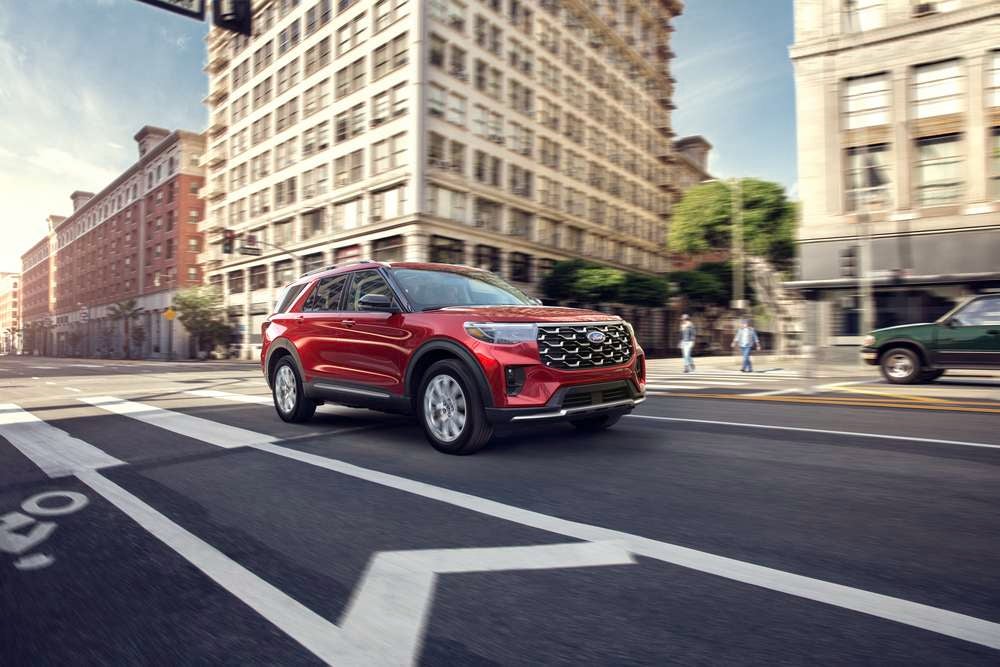
For many Sealy families, the better fit comes down to how the SUV will be used most often. The 2026 Ford Explorer stands out if you want standard 5,000-pound maximum towing across the lineup, a choice of six- or seven-passenger seating depending on trim and options, and current Ford technology like a 13.2-inch center display. The 2026 Honda Pilot may appeal more if you want more published passenger and cargo room, including up to eight-passenger seating depending on trim, 40.8 inches of second-row legroom, and 18.6 cubic feet of cargo space behind the third row.
For a practical comparison in Sealy and along the I-10 corridor west of Houston, start with the exact vehicles you are considering. A current new Ford Explorer selection, the available used SUV inventory, and the Ford Blue Advantage lineup can help you compare model years, trims, and equipment side by side. Specifications, pricing, availability, and features can vary by model year, trim, package, drivetrain, and configuration, so confirm the details for the specific vehicle with Ryan Ford and Ford before making a final decision.
Which Seating Setup Works Better for Your Family?
If your third row is used often, seating layout matters as much as passenger count. On the 2026 Explorer, Ford says seating varies from six to seven passengers depending on model and options. Second-row captain’s chairs are standard on all Explorer models except ST-Line, while ST-Line uses a standard second-row bench and some other Explorer trims can be configured with a bench seat.
Honda takes a different approach. The 2026 Pilot seats seven or eight depending on trim. Honda also publishes 40.8 inches of second-row legroom and 32.5 inches of third-row legroom. Ford publishes 37.5 inches of second-row legroom on Explorer Active 100A and Active models, 37.0 inches on ST-Line, ST, Tremor, and Platinum, plus 31.8 inches of third-row legroom across the current Explorer line.
Published Family-Space Snapshot
Numbers are helpful, but family fit is more than measurements. If you use child seats, boosters, or a stroller every day, bring that gear into the decision. A second-row bench can help if you regularly carry more people. Captain’s chairs can help if you want easier third-row access.
What Cargo Space Matters Most on Real Trips?
For family travel, the most useful cargo number is usually the one that matches your normal seating setup. If every row is filled on a road trip, the space behind the third row matters much more than the biggest cargo figure with rear seats folded.
Ford lists 16.3 cubic feet of cargo room behind the third row on the 2026 Explorer. Maximum cargo capacity is 85.8 cubic feet on Explorer Active 100A, Active, and ST-Line, and 85.3 cubic feet on ST, Tremor, and Platinum. Honda lists 18.6 cubic feet behind the third row on the 2026 Pilot, 48.5 cubic feet behind the second row, and maximum cargo volume that varies by trim, reaching as much as 113.7 cubic feet.
That gives the Pilot an advantage on published cargo volume, but layout still matters. The shape of the load floor, the size of the cargo opening, and how easily the seats fold can affect daily use just as much as the official numbers.
Before your drive, think about the gear that usually travels with your family:
Child seats or boosters
A stroller or folding wagon
Sports bags or school backpacks
Coolers, groceries, or weekend luggage
A pet crate or travel kennel
If you want to test cargo fit before choosing an SUV, knowing your current vehicle’s value can also help you compare your options. Ryan Ford’s trade appraisal tool can give you a starting point while you compare cargo and seating needs with your next vehicle.
How Do Power and Towing Compare?
If your family travel plans include a small camper, utility trailer, or boat, compare towing by the exact configuration. For the 2026 Explorer, Ford lists a 2.3L EcoBoost® I-4 rated at 300 horsepower and 310 lb.-ft. of torque on current 2.3L models, while the 2026 Explorer ST uses a 3.0L EcoBoost® V6 rated at 400 horsepower and 415 lb.-ft. of torque. Ford also says all 2026 Explorer models come standard with the Class III Tow Package and a maximum towing capacity of 5,000 pounds.
The 2026 Honda Pilot uses a 3.5-liter V6 rated at 285 horsepower and 262 lb.-ft. of torque. Honda lists maximum towing capacity at 5,000 pounds for AWD trims and 3,500 pounds for 2WD trims, with accessory towing equipment required.
For family buyers, that means the Explorer gives you a simpler towing starting point. Every current Explorer model is published with the same maximum towing figure. Pilot shoppers need to pay closer attention to whether the SUV is 2WD or AWD.
Proper towing still depends on the exact vehicle, trailer weight, passengers, cargo, hitch equipment, and setup. If towing is part of your decision, it helps to review the 2026 Ford Explorer model details, Ford’s 2026 Explorer towing information, and the 2026 Honda Pilot specifications before comparing two exact vehicles.
What Should You Look For in a Family Test Drive?
A family SUV can look similar on paper and still feel very different once everyone climbs in. For a useful test drive in Sealy, focus on the parts of ownership your household will use every week.
Test-drive priorities worth checking:
Third-row access with a child seat installed
Seat comfort in all three rows
Visibility while parking
Screen layout and everyday controls
Cargo loading height
Rear climate access
USB charging access for passengers
How quickly the seats fold and return to place
The 2026 Explorer also gives shoppers a clear look at current Ford cabin tech. Ford highlights a 13.2-inch center display and Ford Digital Experience on the current Explorer line. Honda updated the 2026 Pilot with a 12.3-inch touchscreen across the lineup. If technology matters on long drives, take a few extra minutes to pair your phone, test the screen menus, and sit in the third row before deciding.
Ford driver-assist features are designed to assist the driver and do not replace attentive driving or safe vehicle operation. As with cargo and towing, technology features can vary by trim and equipment, so compare the exact vehicle rather than assuming every Explorer is equipped the same way.
Should You Compare New, Used, and Certified Options?
Yes. A current new Explorer, a used Explorer, and a Ford Blue Advantage vehicle can offer different seating layouts, features, warranties, and model-year details. If you are comparing family-SUV options carefully, it makes sense to look at more than one ownership path instead of assuming the newest model is the only fit.
Long-term convenience can matter, too. If ownership support is part of the decision, Ryan Ford also offers online service scheduling, Ford Mobile Service, and Ford Pickup & Delivery for participating service visits.
Compare Family-SUV Priorities With Confidence
Use our Explorer vs. Pilot research to revisit the family-travel features that matter most to your daily routine. At Ryan Ford, we can help you narrow your considerations based on seating, cargo needs, technology, and driving preferences. When you are ready to discuss your next steps, contact us with your questions.
Family Travel Questions
Can I Bring Child Seats or a Stroller to a Test Drive?
Yes, it is worth asking ahead of time. A hands-on fit check with the gear your family actually uses can tell you much more than a spec sheet.
Does Every 2026 Explorer Tow the Same Amount?
Ford publishes a maximum towing capacity of 5,000 pounds for all 2026 Explorer models with the standard Class III Tow Package. Even so, trailer loading, hitch equipment, passengers, and cargo still matter, so review the exact vehicle and towing guidance before towing.
Should I Compare a New Explorer With a Used or Certified One?
Yes. Model-year changes can affect seating layouts, cargo configurations, technology, towing equipment, and warranty coverage. Compare the exact vehicle rather than assuming the same features carry forward.
Can I Value My Trade Before Visiting?
Yes. A trade estimate can help you prepare, but final appraisal depends on the vehicle’s condition, history, equipment, and in-person review.